
How to find someone’s address depends on what you already know and why you need it. Free public records, the post office, and online searches are the place to start.
Those sources often return an old address, because people move all the time. About one in eight Americans moved in 2024, according to Census Bureau data on how many people move.
At Low Cost Detectives, we have traced people for over 30 years in 170+ countries. This guide shows how to find out where someone lives, and when to call a professional.
Key Takeaways
- Knowing how to find someone’s address starts with what you know. That means a full name, a last known address, and mutual contacts.
- Free sources include property tax records, court records, voter registration, and social media.
- Free results are often outdated, so confirm any address before you rely on it.
- Every search needs a lawful purpose. Harassment and stalking are crimes.
How to Find Someone’s Address for Free: Records and Searches to Try First
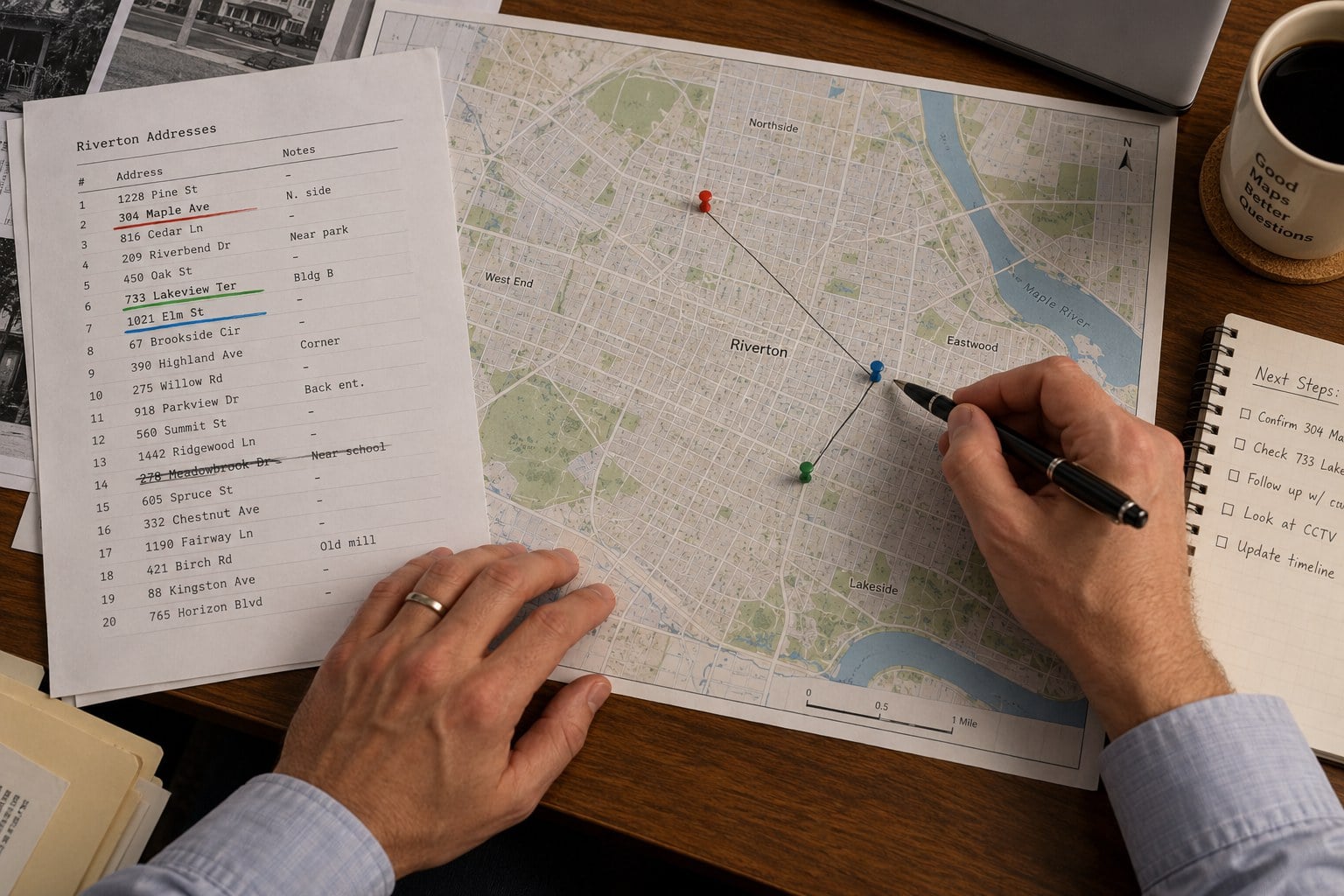
Learning how to find someone’s address for free starts with the people and records closest to them. Gather their full name, previous addresses, phone number, and date of birth if you have it. Each detail helps you narrow the search. Then work through these free sources, roughly in this order.
- Ask people you both know. Mutual friends, family members, old friends, and classmates often know a new address. A polite question costs nothing.
- Search by name online. Search engines, social media profiles, and LinkedIn can show a city, an employer, or recent activity. They rarely show an exact address.
- Try a reverse phone lookup. A reverse directory may link a phone number to an address. Even the area code can point you to a region. Old phone books and white pages in public libraries can help too.
- Check county records. The county clerk’s office holds property, business, birth, marriage, and death records. The assessor’s property tax records list owners and their addresses.
- Look at voter registration. The registrar of voters holds the address a person gave when they registered. Access rules differ by state.
- Search court records. Earlier cases can contain an address the person gave the court.
The California Courts guidance on finding someone lists most of these sources. It also suggests asking people the person used to live or work with.
| Free source | What it may show | Main limit |
|---|---|---|
| Property tax records | The name and address of a property owner | Renters do not appear |
| County clerk’s office | Property, business, and vital records | Covers one county only |
| Voter registration | The address given at registration | Access rules differ by state |
| Court records | An address from a past case | May be years old |
| Post office | A new address, only for serving court papers | US only, and a form is needed |
| Social media | A city, an employer, or recent activity | Rarely an exact address |
| Mutual friends and relatives | A direct answer | They may not know, or may not say |
Many people search tools promise a shortcut in how to find someone’s address. Address lookup tools work the same way, pulling these records together. They are fast, but they copy the same old data. Treat any result as a possible address, not a confirmed one.
Why Do Free Searches Often Return an Old or Wrong Address?
Free searches return old addresses because records lag behind real life. A property record shows who owns a home, not who lives there. A court file shows where someone lived years ago. Online databases copy these sources and rarely check them.
Moves make the problem worse. The Census Bureau puts the share of Americans who moved in 2024 at 11.8 percent. Each move leaves an old address behind in dozens of records. This is the weak point in how to find someone’s address for free.
Names cause problems too. A search by name alone mixes up people with similar names. Maiden names, nicknames, and spelling changes split one person across several records. Cross-reference at least two sources before you trust a result.
Can the Post Office Give You a New Address?
Only in narrow cases, and only in the United States. Under the federal rule on releasing a new address, USPS can share a forwarding address for court papers. The requester must certify it “will be used solely for service of legal process.” USPS can also refuse “for the protection of the individual’s personal safety.”
The Utah courts suggest a simple check anyone can use. Mail a letter to the last known address marked “ADDRESS CORRECTION REQUESTED / DO NOT FORWARD.” If a forwarding address is on file, the post office returns it with a correction label. Not everyone files a change of address, so an empty result proves little.
Is It Legal to Look Up Someone’s Address? The Limits You Must Respect
Yes. Learning how to look up someone’s address in public records is generally legal. Most questions about how to find someone’s address come down to purpose. Reconnecting with family, service of process in a lawsuit, and recovering a debt are legitimate reasons. Using an address to frighten, follow, or pressure someone is not.
The Justice Department’s guidance on stalking leaves no room for doubt:
“Stalking is a crime in all 50 states, Washington, D.C., the U.S. Territories, and the Federal Government.”
Privacy laws also protect people at risk. Many states run address confidentiality programs for victims of domestic violence and stalking. Washington State ran the first one. It reports that 44 states and the District of Columbia now have similar programs. Participants use a substitute address, so public records do not show where they live.
Some personal information is closed to the public by law. Never try to reach them by pretending to be someone else. At Low Cost Detectives, we check the purpose of every case before we accept it. We decline any case that raises concern.
Finding an Address to Serve Court Papers
Courts expect a real effort before they allow another way to serve. If the person still cannot be found, a court may allow service by publication. The Utah Courts guidance on finding people for service is direct. “Remember, you have to show the court you used reasonable diligence.”
Keep a dated record of every search, call, and letter. When a hearing is close, many firms turn to litigation support for legal teams. Creditors face the same problem when tracing a debtor who has moved.
When Should You Hire a Professional to Find a Person’s Current Address?
Hire a private investigator when the result has to be right, or when your own search has stalled. That includes court deadlines, debts, estates, and people who have moved more than once. It also includes searches across borders, where records and languages differ.

This is where how to find someone’s current address becomes a job for a specialist. Sometimes every free step in how to find someone’s address leads back to the same old record. At Low Cost Detectives, our investigators use open-source research, databases, field inquiries, and locally employed agents. They confirm the address before they report it, so you are not left with another guess. Every search is discreet. Our service standard is simple:
“The subject is never alerted or approached unless the client specifically requests contact facilitation.”
Here is one example from our casework. A UK law firm needed a confirmed address for a defendant before a civil court hearing. Our investigators located the person at a new residential address within the required timeframe. The proceedings were able to continue.
In business and legal work, this kind of search is often called skip tracing. Our short guide explains what skip tracing involves. Another explains how person tracing and skip tracing differ.
For personal searches, see our people tracing investigators. For creditors and law firms, see professional skip tracing support. If you are trying to reconnect, read about finding an old friend after decades. Not sure which fits? Talk to our team in confidence.
Need an Address You Can Rely On? Start With a Confidential Conversation
You now know how to find someone’s address with free tools, and where those tools stop. When working out how to find a person’s address, start with people and public records. Use the post office route only if you are serving papers. Confirm any result with a second source, and stay within the law at every step.
If the address has to be right, Low Cost Detectives can help. We work in 170+ countries with a 95% global success rate. Speak to our case managers about your situation. Every inquiry is handled in confidence.
Frequently Asked Questions About Finding Someone’s Address
Is it legal to find someone’s address?
Yes, when you use lawful sources and have a legitimate purpose. Property and court records are public by design. The law steps in when a search turns into harassment, stalking, or deception. Some people at risk join confidentiality programs, so their real address is kept off public records on purpose.
Can you find someone’s address for free?
Often, yes. Ask mutual contacts, then check property tax records, court records, voter registration, and social media. Free people search tools can help you narrow the search, but their data is often outdated. Confirm any address with a second source before you send anything important or plan a visit.
How do you find someone’s address with only a name?
With only a name, how to find someone’s address comes down to narrowing the field. Add a city, an age, or an employer to your search. Check social media and professional sites. Then search county property and court records. Confirm the middle name or date of birth.
Can the post office give you someone’s new address?
Only in limited cases. In the United States, USPS can release a forwarding address for service of legal process. The request needs a written certification in a set format. USPS can refuse to protect a person’s safety. It will not release an address simply because you ask.
How do you find an address to serve court papers?
Use public records, mutual contacts, and the USPS request for process servers. Keep a dated log of every attempt, because the court will want to see it. If the person still cannot be found, a court may allow service by publication. A professional trace can also help before a deadline.
Will the person know you are looking for them?
Not if the search is done properly. Public records and discreet inquiries do not alert anyone. At Low Cost Detectives, we never contact the person unless you ask us to arrange contact. When we do, a careful first approach gives them the choice of whether to reply.