How to find birth parents is a question many adoptees carry for years. The answer depends on where you were adopted and what you already know.
Adoption records, DNA tests, and reunion registries are the usual starting points. Each one can stall. About half of US states let adults get their original birth certificate. That figure comes from federal guidance on searching for birth relatives.
At Low Cost Detectives, we have traced people for over 30 years in 170+ countries. This guide takes each route in turn, and explains how consent shapes every step.
Key Takeaways
- Learning how to find birth parents starts with what you can request. That means adoption records, background information, and your original birth certificate.
- A consumer DNA test can match you with biological relatives, even when records are sealed.
- Registries and confidential intermediaries let both sides consent before any contact.
- When a name is known but the person is not, a professional search can confirm their current address.
How to Find Birth Parents Through Adoption Records and Birth Certificates
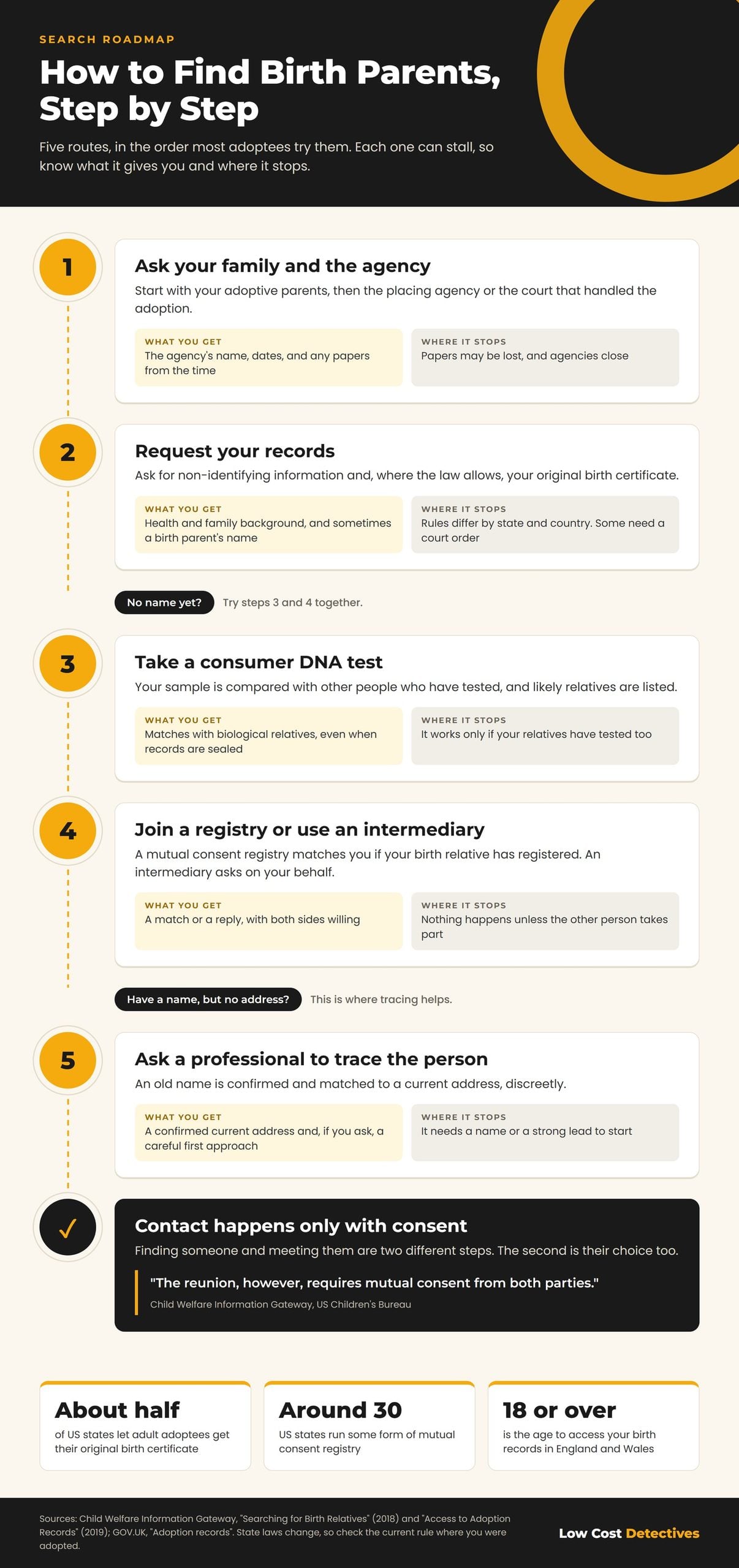
The first step in how to find birth parents is the records. In most places, adoption records are sealed once the adoption is final. That does not mean nothing is available. Adult adoptees can usually request background details, and many can request their original birth certificate. What you can get depends on the state or country that holds the file.
Begin with what your family already has. Ask your adoptive parents for the adoption agency’s name and any papers from the time. Then contact the placing agency or the court that handled the adoption.
What You Can Request in the United States
Records fall into two groups, and the difference matters.
- Non-identifying information. This covers health history, family background, and the birth parents’ ages and education. Nearly all states release it to adult adoptees on written request.
- Identifying information. This means names and addresses. Nearly all states release it only when the person named has consented.
- Your original birth certificate. It shows a birth parent’s name at the time of birth. Some states release it on request. Others require a court order.
State laws differ, and they change often. The Child Welfare Information Gateway, part of the US Children’s Bureau, explains how each state handles adoption records.
If You Were Adopted in England or Wales
In England and Wales, how to find birth parents starts with a legal right to your birth records. The GOV.UK guidance on adoption records is clear. “You need to be 18 or over to do this.” The General Register Office holds the records.
People adopted before 12 November 1975 may need a counseling session first. That applies if you do not know your birth details. For adoptions elsewhere, contact the register office in the place where you were adopted.
Can a DNA Test Help You Find Your Birth Parents?
Yes, and it has changed how to find birth parents. A consumer DNA test compares your sample with other people who have tested. It then lists your DNA matches and estimates how closely each one is related. A close match can point to a birth parent even when adoption records stay sealed.

For many adoptees, this is where finding birth parents becomes possible. The federal factsheet notes that genealogy and DNA testing sites “may help you find information about birth relatives.”
What a DNA Match Can and Cannot Tell You
A DNA test works only if biological relatives have tested too. You may match a birth mother or biological father directly. More often you match cousins or half-siblings. Genealogy research and a family tree help you see how each match connects to you.
Keep three limits in mind:
- A match is a lead, not an address. A name still has to be confirmed and located.
- A match is a person. A cousin may not know about the adoption. Go gently.
- Results can surprise you. Prepare for news you did not expect, and lean on support from people you trust.
We do not offer DNA testing, and we do not interpret results. Our role starts when you have a name or a strong lead.
What If Your Records Are Sealed? Registries, Intermediaries, and Consent
Sealed adoption records do not end the question of how to find birth parents. Registries and intermediaries exist for exactly this situation. They let adoptees and birth relatives find each other when both are willing. Consent is the principle behind all of them, and it protects privacy on both sides.
Mutual consent registries. Around 30 US states run some form of adoption registry. You add your details. If a birth relative has registered too, the registry makes a match. The Texas Central Adoption Registry is one example. It is open to adult adoptees, birth parents, and biological siblings. Taking part is voluntary.
Confidential intermediaries. In some states, a confidential intermediary can contact a birth parent for you. The intermediary asks whether they are willing to share details or meet. Some courts appoint one when you petition to open sealed records.
The UK route. England and Wales have the Adoption Contact Register. GOV.UK says it “is not a tracing service.” For a connection, “you must both be on the Adoption Contact Register.” Approved intermediary agencies can also trace a birth relative. You can make contact only if that person agrees.
These safeguards exist for a reason. Many birth parents in a closed adoption were promised privacy. Some want contact, and some do not. The Child Welfare Information Gateway puts it plainly:
“The reunion, however, requires mutual consent from both parties.”
| Route | What it can give you | Main limit |
|---|---|---|
| Adoption agency or court records | Background and sometimes identifying information | Rules differ by state and country |
| Original birth certificate | A birth parent’s name at the time of birth | Not available everywhere |
| Consumer DNA test | Matches with biological relatives | Needs relatives who have also tested |
| Mutual consent registry | A match when both sides have registered | Works only if the birth parent has joined |
| Confidential intermediary | A contact made on your behalf | Used in some states and in England and Wales |
| Professional tracing | A confirmed current address and a discreet first approach | Needs a name or strong lead to start |
When Should You Ask a Professional to Help Find Your Birth Parents?
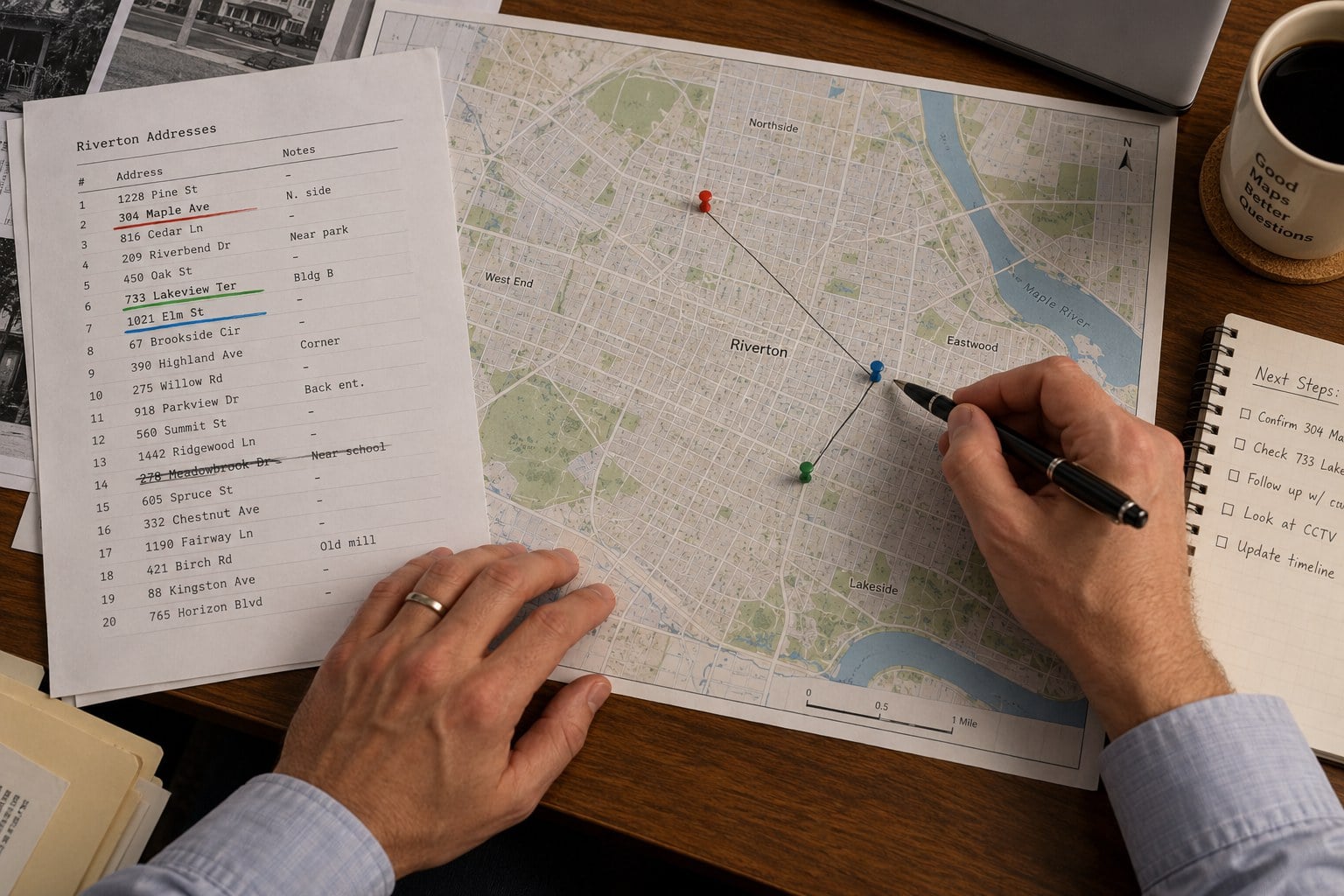
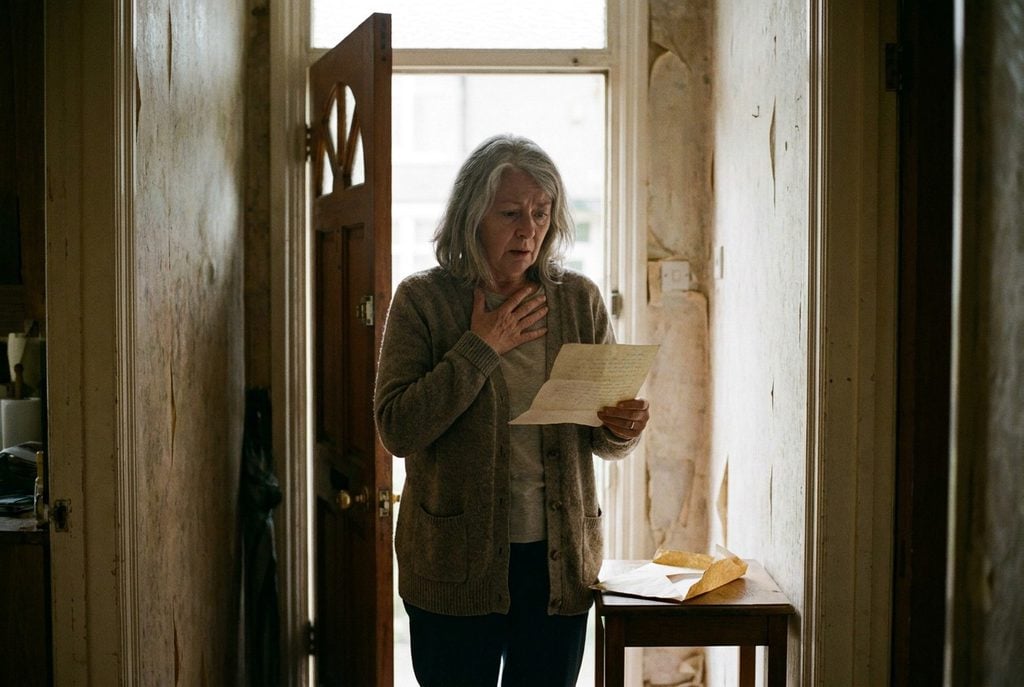
Ask for help when you have a name or a strong lead but cannot find the person. Records and DNA often give a name from decades ago. People marry, move, and change countries. A professional search turns that old name into a confirmed, current address.
Many adoptees first type “how to find my birth parents” into a search bar. Others search “find my birth mother.” The honest answer to how to find birth parents is that the paper trail often ends early. That is the point where tracing helps.
At Low Cost Detectives, our people tracing investigators use open-source research, databases, field inquiries, and locally employed agents. They confirm an address before they report it. International adoptions often mean tracing relatives in another country, where local knowledge matters.
Discretion matters most here. Our service standard is simple:
“The subject is never alerted or approached unless the client specifically requests contact facilitation.”
If you want contact, we can make a careful first approach. Your birth parent then chooses whether to reply. The federal factsheet says the same of any good searcher. “Reputable professional searchers will always respect your pacing and boundaries.”
Here is how we confirm a relative’s address once a name is known. A client in Australia had lost contact with a family member living abroad. Our team in Thailand used database research and local field inquiries. They confirmed the address and provided verified contact details within five days.
Not sure whether you have enough to start? Talk to our team in confidence. We will tell you honestly what is possible.
Taking the Next Step in Your Search, at Your Own Pace
You now know how to find birth parents through records, DNA, and registries. Request what the law allows. Consider a DNA test. Join the registry where you were adopted. Give each step time, and look after yourself along the way.
Some searches end in a reunion, and some do not. Either way, knowing more about your origins has value. Our guide to reconnecting with people from your past covers the first conversation.
If you have a name and need to find the person, Low Cost Detectives can help. We work in 170+ countries with a 95% global success rate. Speak to our case managers whenever you are ready. Every inquiry is handled in confidence.
Frequently Asked Questions About Finding Birth Parents
Can you learn how to find birth parents for free?
Yes, in part. Asking your adoptive family costs nothing. Some reunion registries are free to join, and volunteer searchers help adoptees without charge. Record requests, DNA tests, and court petitions can carry a fee. Start with the free routes. Then decide what else you need, and what you are ready for.
Can you get your original birth certificate?
It depends on where you were born. About half of US states let adult adoptees request it. Others ask for a court order or a birth parent’s consent. In England and Wales, adopted adults aged 18 or over can apply to the General Register Office. Check the current rule before you apply.
What is the difference between identifying and non-identifying information?
Non-identifying information describes your birth family without naming them. It covers health history, ages, education, and the reason for the adoption. Identifying information includes names and addresses, past or present. Most states release the first to adult adoptees on request. They release the second only when the person named has consented.
Is a DNA test how to find biological parents when records are sealed?
Often, yes. A DNA test does not depend on adoption records. It compares your DNA with other people who have tested and lists likely relatives. You may match a parent, or a cousin who leads you to one. It works only when biological relatives have tested too.
What if a birth parent does not want contact?
That is their right, and it can be hard to hear. Registries and intermediaries are built so that both sides agree before details are shared. If the answer is no, you may still receive medical or background information. Support groups and adoption-competent counselors can help you with what comes next.
Can a private investigator find your birth parents?
Often, once there is a name or a strong lead. Low Cost Detectives does not open sealed records or run DNA tests. Our investigators trace the person named in your records or matches. They confirm a current address through lawful research and local inquiries. If you ask, we can make a discreet first approach.
Will a birth parent know you are looking?
Not during a properly run search. Requesting your own records does not alert them. Our investigators work discreetly and do not contact the person while they search. We approach them only if you ask us to. A careful first approach gives your birth parent the choice of whether to reply.