

Working out how to find an old friend is hard once social media has drawn a blank. Better methods exist, and most people never hear about them.
You are far from alone. A 2025 Talker Research survey of 2,000 Americans looked at fading friendships. Adults said they had lost touch with about nine friends in ten years.
At Low Cost Detectives, we have been locating individuals for over 30 years, across 170+ countries. This guide covers what to try yourself first. It also explains when a professional trace makes sense.
Key Takeaways
- How to find an old friend starts with your own memory. Write down every detail before you search.
- Free methods come first: social media, alumni groups, mutual friends, and public records.
- Name changes, moves abroad, and no online presence are the usual reasons a search stalls.
- When your own search runs out, our person tracing service carries on, with a 95% global success rate.
Why People Lose Touch with Old Friends
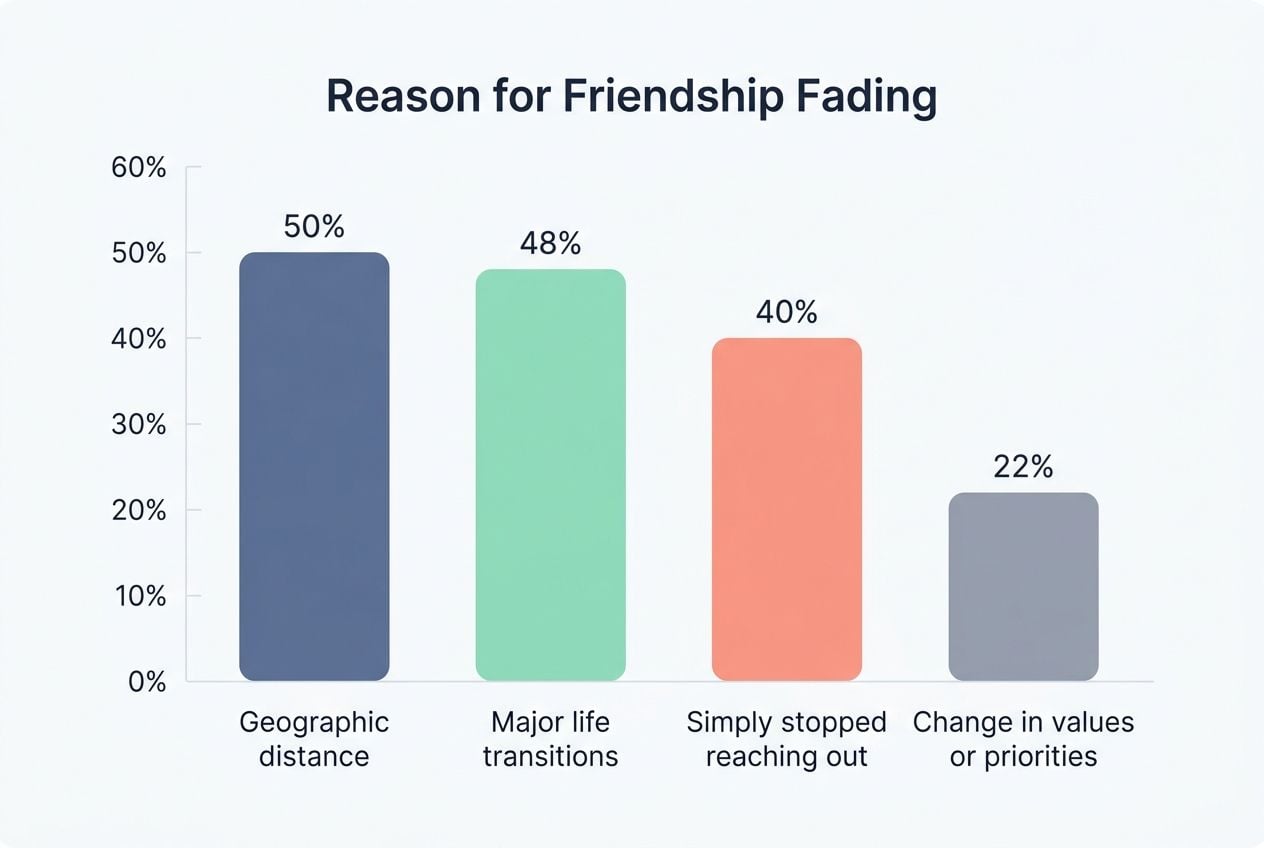
Most friendships fade quietly, without any falling out. Distance and life changes do most of the damage. In the Talker Research survey, 50% blamed geographical distance and 48% blamed life transitions. Another 40% said the friend simply stopped reaching out.
Seven in ten adults also said keeping close friends gets harder with age. New friendships do not fill the gap easily. Psychologist Kylie Sligar told the researchers that making them in adulthood “can be really challenging.”
That is why old friends matter. Psychologist Dr. Marisa G. Franco advises people to “reconnect with people from your past.” She says old friends are “more likely to want to hear from you than you think.”
Before You Begin: Gather Everything You Remember
Start by writing down every detail you can recall, however small. People often ask us how to find an old friend with almost nothing to go on. The answer is that two or three details together do the work. They separate your friend from everyone else with the same name.
- Names. Full name, nicknames, and a maiden or married name if you know it.
- Places. Every last address, town, or neighborhood you remember, with rough dates.
- Dates. A birthday, or an age range.
- Background. Schools, an alma mater, employers, or military service.
- People. Relatives and mutual acquaintances who may still be in touch.
Free Methods Worth Trying First
Free methods find many old friends, so try them before paying for anything. The simplest answer to how to find an old friend is often a mutual contact. If you want to find an old friend online, work through the list below.
- Social media. Search every name variation, then check the friend lists of mutual acquaintances.
- Alumni groups. School and college networks keep old classmates connected. Look for an alumni reunion page.
- Mutual friends and family. Ask directly. Someone may still have a number or an address.
- Search engines. Pair the name with a town, an employer, or a hobby.
- Old photos. A reverse image search can match a photo to a current profile.
Keep a note of what you tried and what you found. It saves repeating the same search later. The same steps apply when you want to find a lost friend from further back.
People-Search Tools and Public Records
Public records hold details that social media does not. They can confirm a name change, a move, or a current town. People search websites gather the same records in one place. Their results vary and can be out of date.
- Marriage records and birth records. In England and Wales, the UK General Register Office supplies certificates. A marriage certificate can show a new surname.
- Court records and property records. Many US counties publish these online.
- Political donation records. The US Federal Election Commission lists donors by name, city, and employer.
Paid services and commercial search sites can help with common names. Check what a site covers before you sign up.
UK Methods: Electoral Archives and Professional Tracing Services
In the UK, how to find an old friend often starts with the electoral roll. It is the best-known way to confirm an address. The UK electoral roll comes in two versions. Anyone can buy the open register, but people can opt out of it.
Older electoral archives are kept by local libraries and record offices. Historical street listings such as Kelly’s Directories can place a family at an address decades ago. From there, a search moves forward through later records.
Professional tracing services combine these records with their own inquiries. Our person tracing investigators work across the globe.
When Self-Help Methods Are Not Enough
Some searches stall however careful you are. Your friend may have married, moved abroad, or stepped away from the internet. At that point, how to find an old friend becomes a question of access. You need records and inquiries that are not open to the public.
This is where people tracing service comes in. Low Cost Detectives also has investigators for personal matters of every kind. If your search has stalled, talk to our team in confidence.
How Our Person Tracing Service Works
A Lead Investigator takes ownership of your case from the start. We combine open-source research, specialist databases, and field inquiries through locally employed agents. Every finding is verified before we report it.
The work is discreet. Your friend is not alerted or approached unless you ask us to make contact. You receive regular updates, then a report confirming a current address or contact details.
Low Cost Detectives works through 300+ branches, with a 95% global success rate. Every case depends on the trail a person leaves, so we do not promise an outcome. Some clients ask whether they need person tracing or skip tracing. The methods are the same.
What Information Do We Need to Start?
A name and one other solid detail is often enough to begin. The notes you gathered earlier are the right starting point. Tell us what you know, and what you have already tried.
- The full name, plus any earlier or later surnames.
- A last address, town, or country, with an approximate year.
- An approximate age or date of birth.
- Whether you want an address, contact details, or both.
- Whether your friend may now live overseas.
We also ask why you are looking. Every trace needs a legitimate purpose.
Common Obstacles: Name Changes, International Moves, and No Online Presence
Three obstacles shape how to find an old friend. They are a changed name, a move abroad, and no online presence. Common names add a fourth. Each has a way through, but rarely a quick one.
Name changes. Surname changes after marriage, divorce, or deed poll hide people in plain sight. Marriage records and divorce records connect the old name to the new one.
Common names. Common name combinations return dozens of matches. US investigator Brian Willingham of Diligentia Group describes one such case. A woman wanted to find a lost love from the 1980s, named Richard Jones. He had been stationed in Virginia with the military. Records showed over 50 men with that name. The team sent a military verification request for each one. Eight months later, the final reply confirmed the right man.
International moves. A domestic search goes cold after an international relocation. Overseas searches need local knowledge and local records. Our global tracing network covers 170+ countries.
No online presence. Some people simply stay offline. Field inquiries and official records matter most here.
How to Find an Old Friend When Your Own Search Stalls
Knowing how to find an old friend starts with what you remember. Try the free methods, then the public records. If the trail goes cold, you do not have to stop there.
Low Cost Detectives is available 24 hours a day. Speak to our case managers in confidence, with no obligation.
Frequently Asked Questions About Finding an Old Friend
Can you find an old friend with only a first name?
Sometimes. A first name alone is rarely enough. A first name plus a town, school, employer, or year often is. Write down every detail you remember, then search them in combination. If that fails, an investigator can work from partial details and make inquiries you cannot.
How do you find an old friend who is not on social media?
Use records instead of profiles. Electoral rolls, marriage records, court records, and alumni lists can all place a person. Mutual friends and relatives are often the quickest route. When those run out, professional tracing takes over. It uses specialist databases and field inquiries to find people who stay offline.
What if your friend changed their name?
Search under every name you know, including maiden names and nicknames. Marriage records can link an earlier surname to a new one. A change by deed poll may also leave a record. At Low Cost Detectives, our investigators check name variations on every case. One surname alone often misses the person.
Will your friend know you are looking for them?
Not unless you want them to. Our investigators work discreetly and do not alert or approach the person. Once we confirm where they are, you decide what happens next. If you prefer, we can make the first contact on your behalf, with care.