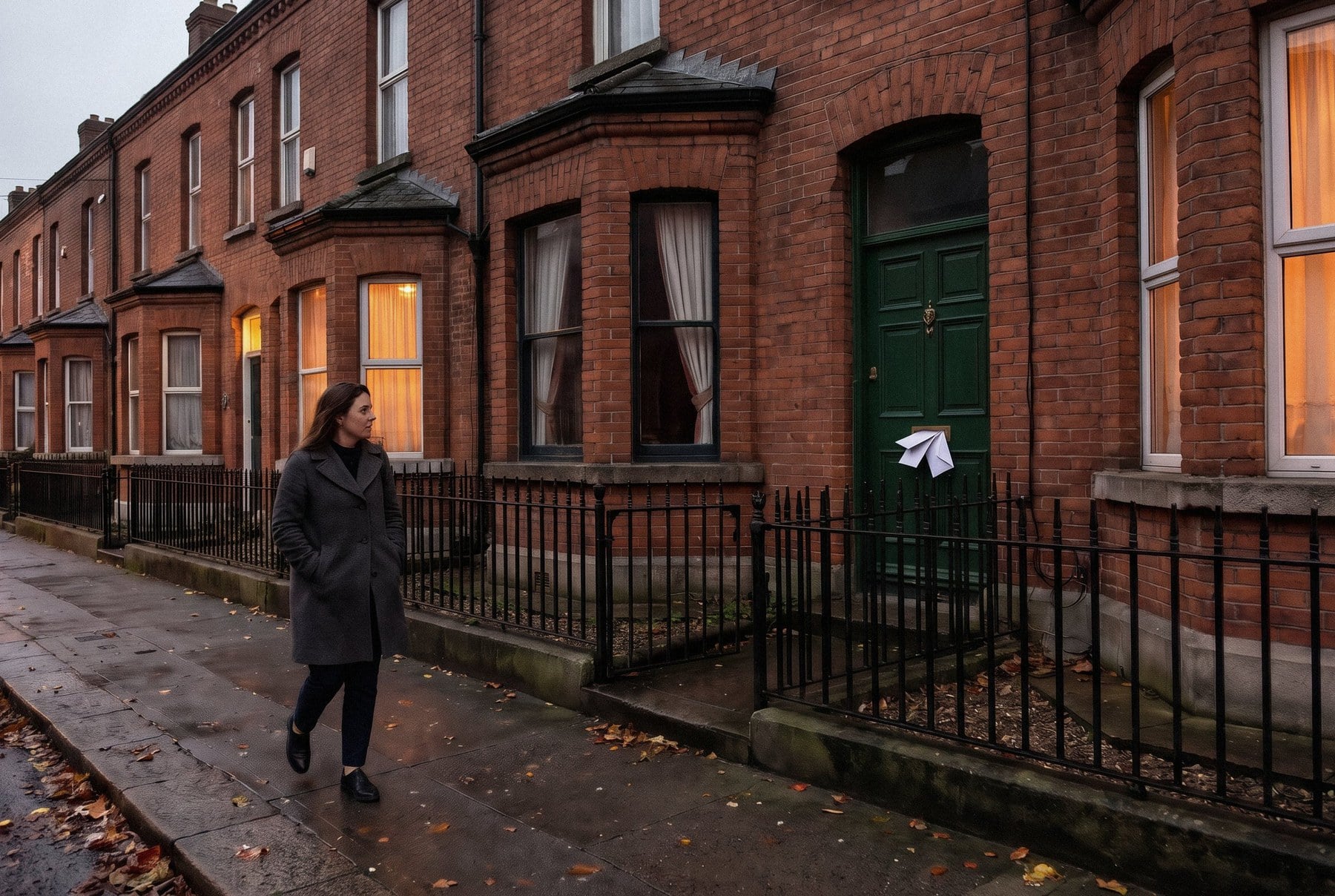

Knowing how to prove someone lives at an address matters most when the paperwork and the truth disagree. For example, a landlord says a daughter is moving in. A tenant on the lease seems to have vanished. An ex-partner insists they live alone.
Move-in claims are common, too. In the first quarter of 2026, Ireland’s Residential Tenancies Board (RTB) received 7,062 notices of termination. Of those, 1,338 gave a landlord or family member moving in as the reason, the RTB reports.
Paperwork shows where someone says they live. But surveillance shows where they actually sleep, park and collect their mail. This guide starts with a recent Irish case, then explains how residential surveillance works. At Low Cost Detectives, we run discreet surveillance in 170+ countries.
Key Takeaways
- Records show a claim, not a life: bills and voter rolls show where someone says they live.
- Patterns prove occupancy: lights, cars and comings and goings, logged at different times, show who lives there.
- It works at tribunals: an Irish tribunal found “no evidence” of a claimed move-in after an investigator’s checks.
- Investigators stay on the street: they watch from public places and never step onto the property.
Thirty Visits and an Empty House: The Surveillance Behind a Tenant’s Tribunal Win
In October 2026, The Irish Times reported a tenancy tribunal win built on surveillance. Two tenants doubted their landlords’ reason for ending the tenancy. So one of them hired a licensed investigator to watch the house. The checks found almost no sign of life, and the tribunal went on to award the tenants damages.
The Notice and the Doubt
Their rented home was a house in Ballsbridge, Dublin 4. In September 2025, a notice of termination said the landlords’ daughter needed the home. The tenants moved out within about two weeks. Still, the timing troubled them, because the notice followed their objection to new rules about their dog.
What the Investigator Logged
The investigator checked the house about 30 times in October and November 2025. Over those two months, the investigator also tried to make deliveries, and nobody answered the door. On just two days, a car sat outside and the lights were on. Otherwise, the house showed no sign of life on any visit.
None of these checks proved much on its own. But together, they formed a dated record of a house that stood vacant.
What the Tribunal Decided
The landlords did not attend the hearing. The tribunal found “no evidence” that the daughter ever lived in the house. It also saw an “ulterior motivation” behind the notice, pointing to its timing. Then it ordered the landlords to pay 837.90 euros for moving costs, plus 500 euros in damages.
An RTB tribunal is a full re-hearing of the dispute, and either side can submit extra evidence. Here, the investigator’s observation log was that evidence. In fact, it shows how to prove someone lives at an address, or that nobody does.
Low Cost Detectives played no part in this case. We share it because it shows what careful observation can achieve.
Why Paperwork Rarely Proves Who Lives at an Address
Paperwork proves a connection to an address, nothing more. A lease, a utility bill or a voter registration shows where someone says they live. Yet none of them shows who sleeps there each night. That is why tribunals and courts often want more than documents when occupancy is in dispute.
Records are the obvious first stop for anyone asking how to prove someone lives at an address. But they go stale quickly. For example, people redirect mail, and utility bills often stay in one name after a move. Someone can also stay registered to vote at an old address for years.
Similarly, tax returns can point to a former residence. Yet the reverse problem is just as common. A new partner may move in without a single bill in their name.
Finding an address is one job, and knowing how to prove someone lives at an address is another. For the first, read our guide to finding someone’s current address. For the second, you need to watch the property itself.
How Residential Surveillance Shows Whether Someone Lives at a Property
Residential surveillance shows occupancy by watching a property over time and logging what happens. Investigators record who arrives and leaves, which cars park outside and when lights go on. Every entry also carries a time and date. Repeated across different days and hours, those entries show whether anyone really lives there.
Many people first ask how to find out if a house is occupied, then walk past. That can hint at life inside, but it rarely holds up. Besides, one look proves little, and a neighbor may notice you.
What a Surveillance Log Records
- Arrivals and departures: who comes and goes, at what time, and whether the same person returns each evening.
- Vehicles: which cars park at the property, and whether they are still there in the morning.
- Lights: whether rooms light up in the evening and go dark late at night.
- Mail and deliveries: whether mail builds up in the letterbox or someone collects it.
- Bins and curtains: whether bins go out on collection day, and whether curtains open and close.
- Overnight presence: whether an occupant seen arriving at night leaves again the next morning.
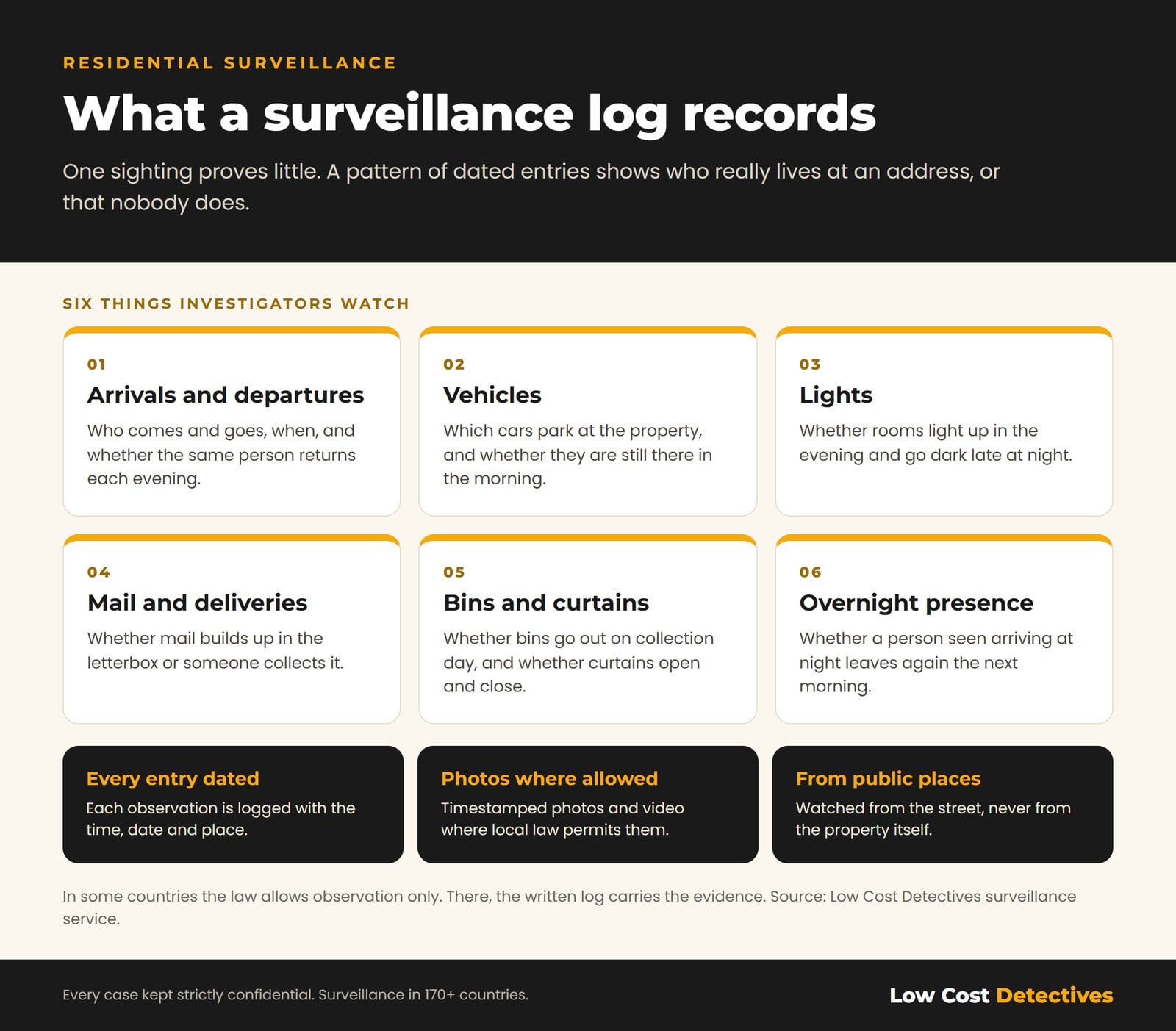
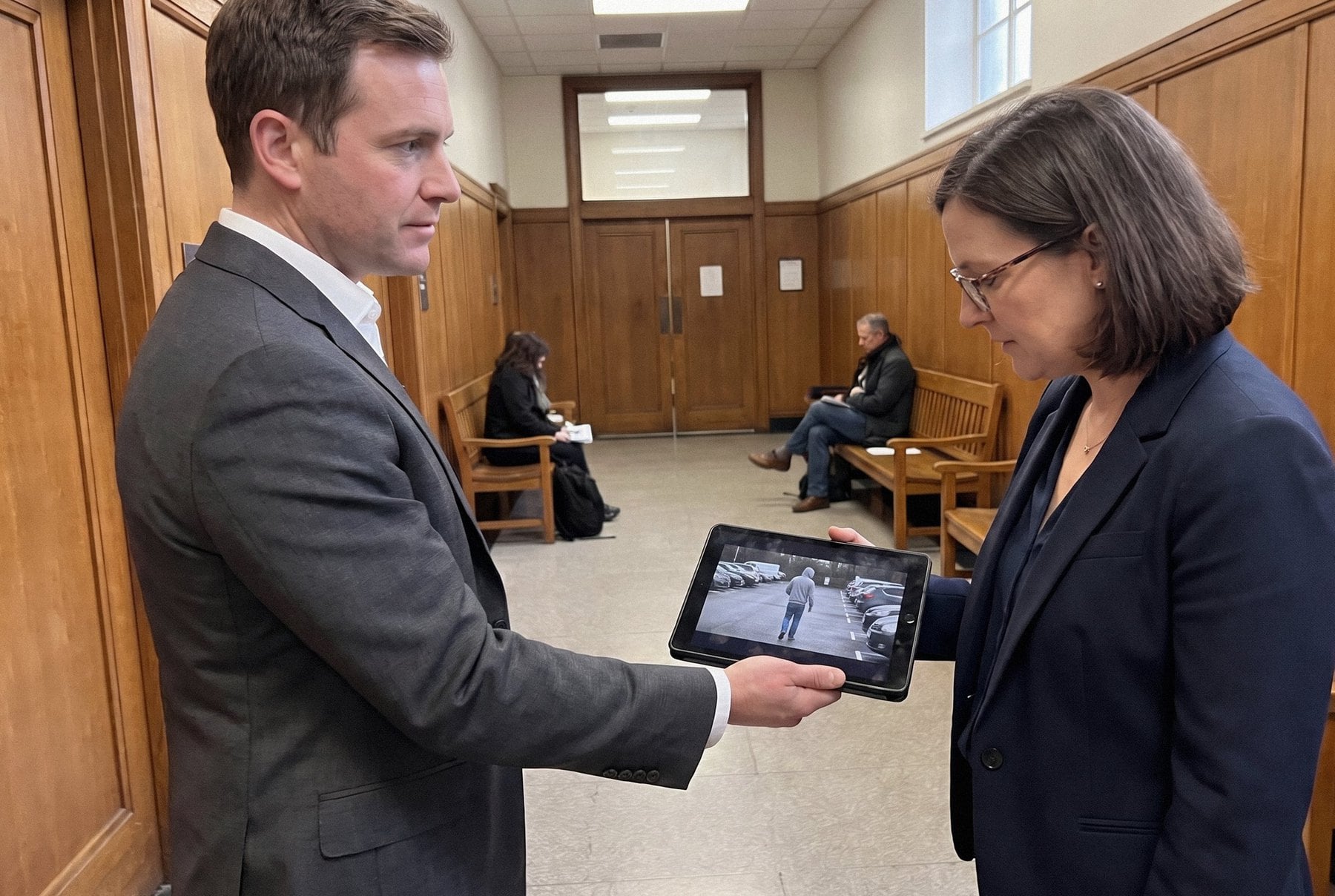
At Low Cost Detectives, a two-person team with a vehicle carries out this work. Each sighting then goes into a written log with the time, date and place. Where local law allows, we add timestamped photos and video.
Where the law allows observation only, the written log carries the evidence. Either way, you receive a full evidence report. Read more about our surveillance services.
How to Prove Someone Lives at an Address: Build a Pattern
One sighting proves almost nothing. A car outside on a Tuesday could belong to a visitor. Lights at night could also run on a timer. A pattern is the real answer to how to prove someone lives at an address.
When the same person arrives each evening and leaves each morning, the log shows a home. When the house stays dark night after night, it shows an empty one. This is also how to prove someone is not living at an address.
That is why we plan surveillance around the days and nights that matter most. Evenings, early mornings and weekends usually say the most. Your case manager uses what you already know to choose those times.
Watched From the Street, Never the Property
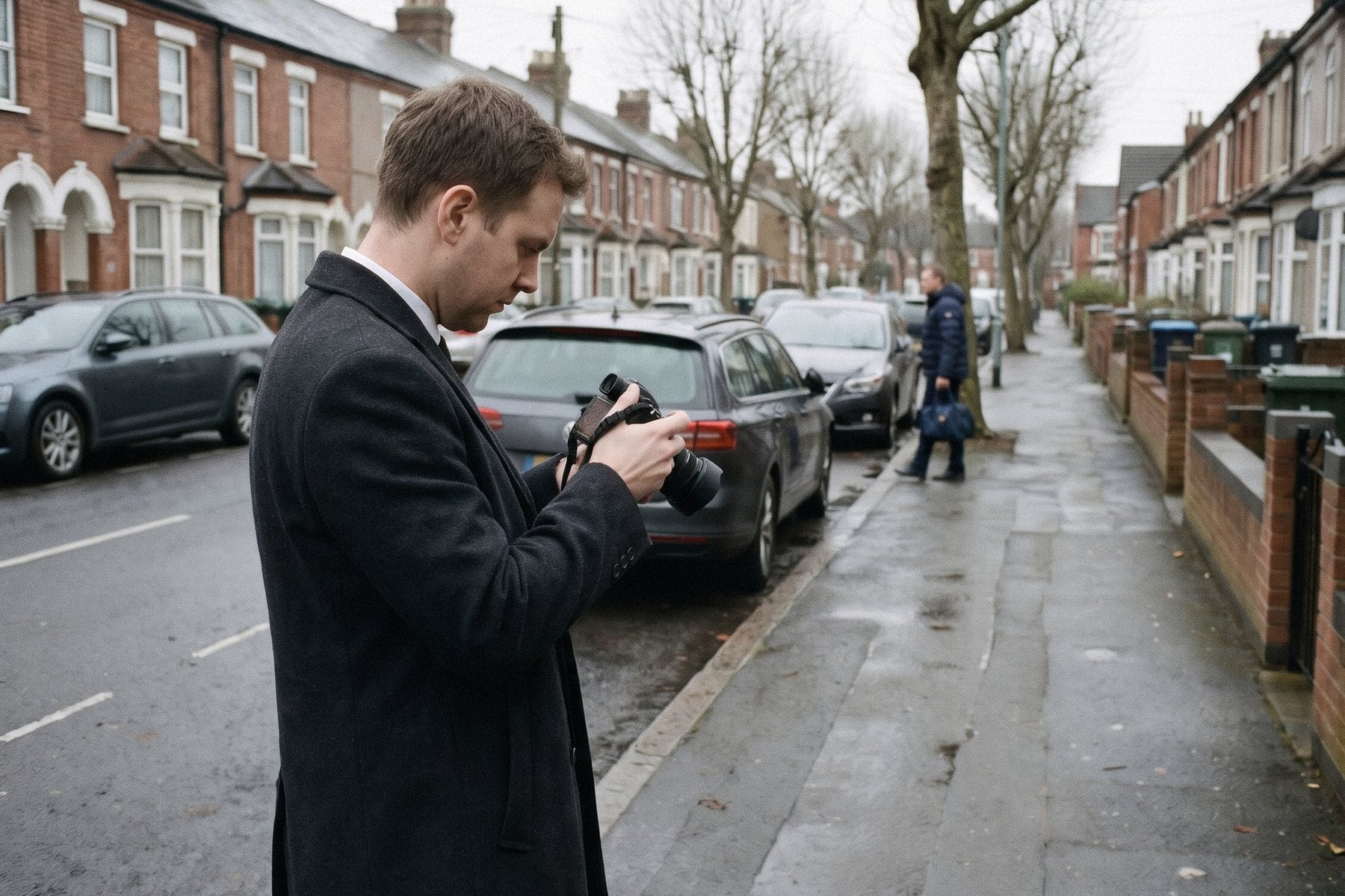
Our investigators watch from public places, such as the street or a parked vehicle. They never step onto the property, look into private rooms or approach the people they observe. As a result, the subject never knows. See how professional surveillance works for a closer look at surveillance techniques.
Not sure whether surveillance suits your situation? Talk to our team in confidence before you decide.
Landlords, Tenants, Ex-Partners and Parents: When You Need Proof of Occupancy
Proof of occupancy matters whenever a decision depends on who really lives somewhere. That might be a tenancy dispute, a maintenance payment or a custody case. Each situation asks how to prove someone lives at an address in its own way. Even so, the method stays the same: watch, log and build a pattern.
Tenants Who Doubt a Move-In Claim
If you think your landlord lied about moving in, start with what you notice after you leave. Dark windows, no car or a for-rent sign are all worth writing down. A professional log can then confirm the pattern.
Timing matters too. In Ireland, the RTB gives tenants 90 days to dispute a notice’s validity. That applies where they have not breached their obligations.
Landlords Who Suspect Subletting
Landlords often face the opposite question: has the tenant moved out and let the apartment to someone else? So the answer to how to prove subletting is the same log of who comes and goes. In England and Wales, unlawful subletting of social housing can be a criminal offense.
Our team for surveillance in the UK works from branches across the country. For new tenancies, our background checks on tenants help you choose well from the start.
Ex-Partners and Cohabitation
Some maintenance agreements end or change if the person receiving payments moves in with a new partner. So the question becomes how to prove someone is living at an address with someone new. Our cohabitation investigations log whether a new partner stays overnight, and how often.
Parents in Custody Disputes
In custody cases, a parent’s primary residence can matter as much as the address they give. Surveillance can also show whether a parent really stays at that address. Our child custody investigations handle these cases with care and discretion.
From Suspicion to a Dated Record: What to Do Next
Wondering how to prove someone lives at an address? First, write down what you have already seen. Include dates, times and anything unusual, such as a dark house or a new car. Then let a professional log fill the gaps.
The Irish tenants turned a doubt into evidence because someone recorded what happened, visit after visit. Low Cost Detectives can do the same for you, too. In Ireland, our investigators in Dublin know the city well. We also provide surveillance across Europe and around the world.
When you are ready, contact us about your case. Everything you tell us stays confidential.
Frequently Asked Questions About How to Prove Someone Lives at an Address
Can a private investigator prove someone lives at an address?
Yes. Surveillance is often how to prove someone lives at an address when records fall short. An investigator watches from public places and logs arrivals, departures, vehicles, lights and mail. Each entry carries a time and date. A pattern across several days and nights says far more than any single document.
How do you prove someone is not living at an address?
You show what never happens. A surveillance log records evenings with no lights, nights with no arrivals and mail left uncollected. In the Irish case, about 30 checks found only two days with any sign of life. That absence, written down and dated, helped persuade a tenancy tribunal that nobody had moved in.
How many visits does it take to show someone lives in a property?
There is no fixed number, because every case differs. What matters most is covering the right times: evenings, early mornings and weekends. Low Cost Detectives plans surveillance around the days and nights most likely to show a pattern. Your case manager uses what you already know about the property to choose them.
Is it legal for an investigator to watch someone’s house?
In most countries, investigators may observe a property from public places such as the street. They must not trespass or intrude on anyone’s right to privacy, such as by recording private conversations. Our investigators follow local law in every country we work in. Some countries allow observation only, without photographs or video, and the written log still carries the evidence.
How much does residential surveillance cost?
Every case is different, so we do not publish prices. The cost depends on the location, the number of days and nights, and what you need to prove. A case manager discusses the scope and costs with you in confidence before any work begins.