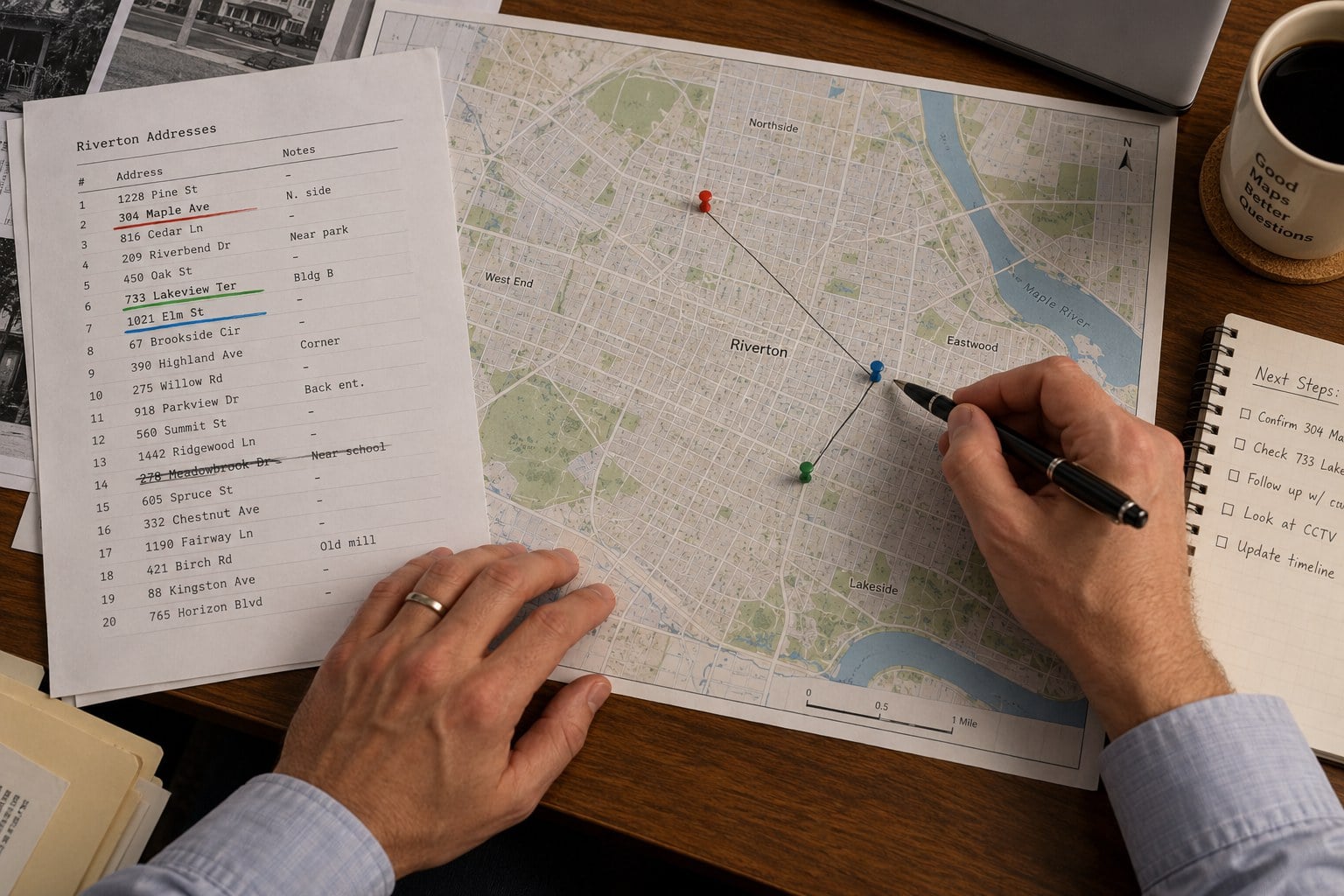

What is skip tracing? It is the process of finding a person who has moved without leaving new contact details.
The person may owe money, be due in court, or hold key evidence. Investigators combine public records, online traces, and local inquiries to confirm a current address.
Interest in the subject is high. Our keyword research shows about 22,200 US searches a month for “skip tracing” alone.
At Low Cost Detectives, we have been locating individuals for over 30 years, across 170+ countries. This guide answers what is skip tracing in full. It covers the term, the steps, the users, and the legal limits.
Key Takeaways
- What is skip tracing? It means locating someone whose address or contact information is no longer known.
- The term comes from “skipping town.” A single search is called a skip trace.
- Creditors, landlords, law firms, and process servers use it most.
- It is legal when the purpose is legitimate and privacy and debt collection rules are followed.
What Is Skip Tracing, and Where Does the Term Come From?
Skip tracing means locating someone whose address or contact details are no longer known. The term comes from the phrase “to skip town.” The “skip” is the person being sought. “Tracing” is the work of confirming their current whereabouts. One search is called a skip trace.
The Skip Tracing Meaning in Plain Terms
People who ask what is skip tracing usually have one of three questions. What is a skip trace? It is one search for one person. What is a skip tracer? It is the person who carries out that search.
The third question is about the skip tracing meaning itself. The National Investigative Training Academy’s definition ties the word “skip” to someone who has left town.
The term grew up in the US around debt collection and legal proceedings. In the UK, the same work is usually called tracing, and a skip tracer is a tracing agent. Our separate guide explains how skip tracing compares with person tracing.
What a Skip Trace Sets Out to Find
A skip trace has a narrow goal. It confirms where a person is now and how to reach them. A typical search looks for:
- Current location: a current address, checked against the last known address.
- Contact information: phone numbers and email addresses that are in use.
- Address history: earlier addresses that show a pattern of moves.
- Names and links: aliases and known associates who may lead to the person.
How Does Skip Tracing Work? The Steps in a Skip Trace
A skip trace works by building a picture from many small facts. The investigator starts with what the client knows, then searches records and online traces. Local inquiries follow where needed. Each finding is confirmed before it is reported. No single source is enough alone.
Asking what is skip tracing is really asking how that search is done. At Low Cost Detectives, a trace follows six steps:
- Confirm the purpose. We check the reason is lawful and gather what you already know.
- Search records. We search open sources and databases for address history and contact details.
- Check online traces. Social media and other digital footprints can show recent activity.
- Make local inquiries. Agents on the ground make discreet inquiries where records run out.
- Confirm the finding. We confirm the result before it is reported.
- Report. You receive a trace report with the address or contact details and the supporting evidence.

Across the industry, common data sources include public records, court records, and property records. Social media platforms and online databases add more. Investigators compare multiple sources, because any one record can be out of date.
Dead ends are normal. A name changes, or a trail stops at an old employer. Good investigative techniques turn those gaps into new lines of inquiry.
Discretion matters throughout. We do not alert or approach the person unless you ask us to.
In one case, a business client in Germany needed to locate a former employee. The employee had left the country owing money. Our investigators confirmed a current residential address in another EU country within eight days. The client could then pursue legal recovery.
How to Skip Trace: What You Can Check Yourself
Readers often ask how to skip trace without help. You can do some early information gathering yourself. Check the last known address, mutual contacts, and public social media accounts. Search engines sometimes show a new employer or town.
Your own search stops where records are private or the person is abroad. It also stops when contact could alert them. At that point, talk to our team in confidence.
Who Uses Skip Tracing, and What Does a Skip Tracer Do?
Skip tracing is used by anyone with a lawful need to find a person. Debt collectors, law firms, process servers, and landlords use it most. A skip tracer does the searching for them. The job is locating individuals and confirming the result with evidence.
The answer to what is skip tracing shifts a little with who is asking. The table shows the main groups.
| Who asks | Who they need to find | Why |
|---|---|---|
| Creditors and collection agencies | A debtor who has moved | To recover an unpaid debt |
| Law firms and process servers | A defendant or witness | To serve legal documents or secure testimony |
| Landlords | A former tenant | To recover unpaid rent or damages |
| Estate lawyers | Heirs and beneficiaries | To settle an estate |
| Families and individuals | A relative or old friend | To get back in touch |
Debt recovery is the best-known use. We cover it in our guide to skip tracing for unpaid debts.
Legal professionals rely on it too. A summons or subpoena cannot be served on someone who cannot be found. Service of process depends on a confirmed address, so we also offer support for civil litigation.
Personal searches use the same methods with a gentler approach. Our people tracing service covers finding family, friends, and heirs.
Other users include insurance companies, journalists, genealogists, and law enforcement. Property investors use the term as well, though that is a different field.
What Does a Skip Tracer Do Day to Day?
What does a skip tracer do in practice? Most of the work is patient checking. A skip tracer reads records, compares dates, and tests each lead. Hard to find individuals leave fewer traces, so the work takes longer.
Private investigators often work as skip tracers. At Low Cost Detectives, tracing sits beside wider services. These include discreet surveillance work and checks on a business or partner. If records fail, an investigator can continue the search on the ground.
Is Skip Tracing Legal? The Limits Every Search Must Respect
Yes. Skip tracing is legal when it has a legitimate purpose and follows privacy laws and debt collection regulations. The search itself is lawful. What the law restricts is how information is obtained and how the person is treated. Harassment, stalking, and misrepresentation are never allowed.
Any honest answer to what is skip tracing includes those limits. The National Investigative Training Academy says skip tracing “should always be conducted with a legitimate purpose.”
In the United States, several federal laws set the boundaries:
- Asking others for a location. Under the Fair Debt Collection Practices Act, a collector must “not state that such consumer owes any debt.” See the federal rules on locating a debtor.
- Harassment. The CFPB’s guidance on collector harassment is direct. Collectors break that Act “when they harass, oppress, or abuse you.”
- Credit reports. Under the Fair Credit Reporting Act, a consumer report needs “a purpose specified in the Act.”
- False pretenses. The Gramm-Leach-Bliley Act targets pretexting. This federal law on false pretenses covers customer information held by financial institutions.
Other countries have their own rules on personal data. In the UK, the Credit Services Association’s tracing standards stress identity. Members must “take reasonable steps to ensure that the person traced is in fact the customer.”
Ethical considerations matter as much as statutes. At Low Cost Detectives, we work within the legal and ethical boundaries of each country. We decline cases where the purpose raises concern.
This section is general information, not legal advice. For a specific matter, speak to a lawyer.
Need to Find Someone? Start With a Confidential Conversation

If you came here asking what is skip tracing, you now have the outline. It is a lawful, methodical search for a person who has moved. Done well, it gives you a confirmed address and the evidence behind it.
If you need that result, read about our skip tracing services. Low Cost Detectives works in 170+ countries, with a 95% global success rate.
Not sure your case qualifies? Speak to our case managers. Every inquiry is handled in confidence.
Frequently Asked Questions About Skip Tracing
What does a skip tracer do?
A skip tracer finds people who have moved without leaving contact details. They search records and online traces, follow up leads, and confirm the result. The aim is a current address or contact route, supported by evidence. Many skip tracers are private investigators, which helps when a search needs local inquiries as well.
Is skip tracing legal?
Yes, when the purpose is legitimate and the methods are lawful. Debt recovery, serving court papers, and finding heirs are common lawful reasons. The law restricts how information is gathered and bans harassment and deception. Rules differ by country, so a responsible investigator checks the purpose of every case before starting work.
How long does skip tracing take?
It depends on what is already known and where the person is. A trace with a recent address and full name is usually quicker. A search across borders, or for someone avoiding contact, takes longer. Your case manager will give you a realistic view of timing before any work begins.
Can you skip trace someone yourself?
You can make a start. Check the last known address, mutual contacts, and public social media. Stop if your search could alert the person or upset someone. Many records are not open to the public, and privacy rules still apply to you. A professional can continue from the point where you stop.
Is a skip tracer the same as a private investigator?
No, though the roles overlap. A skip tracer focuses on locating people. A private investigator does that and more, including surveillance and evidence gathering. Many investigators offer skip tracing as one service. That matters when records give no answer and someone needs to make inquiries in person.
Will the person know they are being traced?
Not in a properly run trace. Our investigators work discreetly and do not contact the person during the search. We approach them only if you ask us to arrange contact. Family reunion cases are one example, where a careful first approach gives the person a choice about replying.