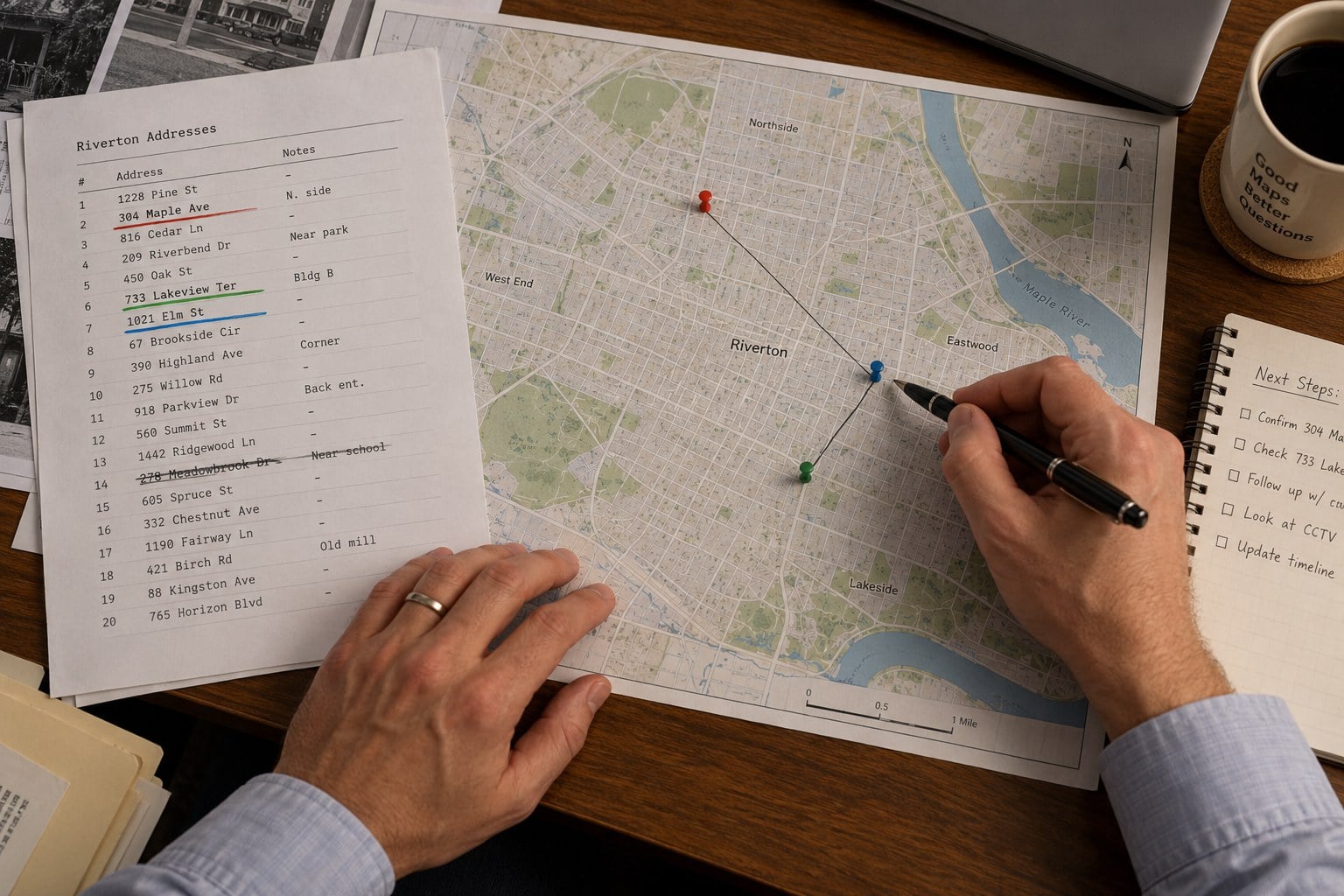

When a tenant left without paying rent, first secure the property and check what you hold. The second is to find the tenant, because recovering the money depends on it.
Most landlords face this at some point. The tenant moves out early, the rent stops, and the forwarding address is blank. Sometimes the bills are unpaid too.
At Low Cost Detectives, we have traced people for over 30 years in 170+ countries. This guide covers what to do when a tenant left without paying rent. It covers recovery in the US and UK, and tracing the tenant.
Key Takeaways
- If a tenant left without paying rent, secure the property and record its condition first.
- In the US, small claims court is the usual route. In England and Wales, it is a county court money claim.
- Any claim needs an address for the former tenant, so finding them comes first.
- Free checks often work. When they do not, a professional trace can confirm where the tenant lives now.
Tenant Left Without Paying Rent: The First 48 Hours
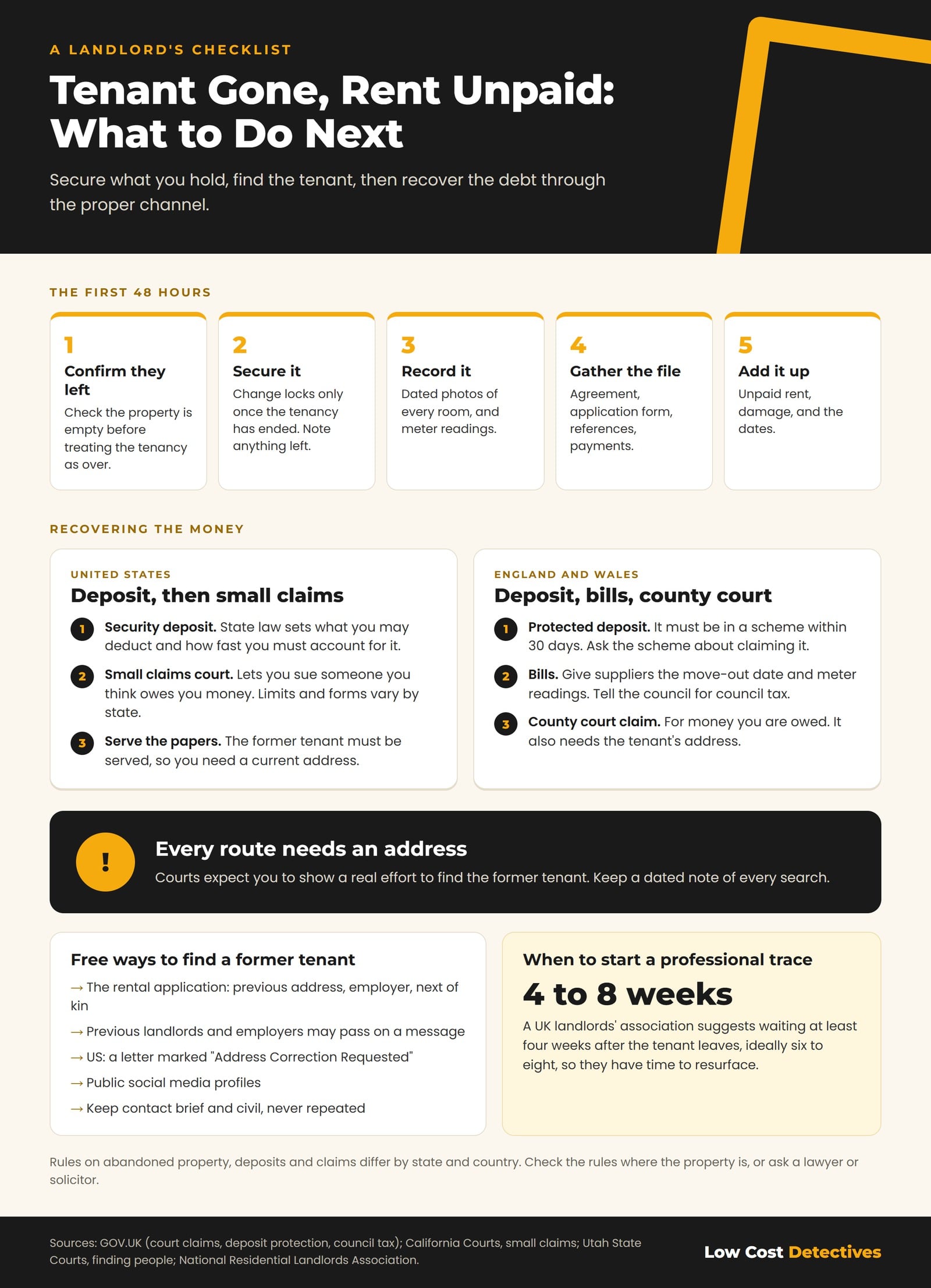
Act calmly and in order. A tenant left without paying rent creates a debt problem, not an emergency. What you do in the first two days decides how strong your claim will be later.
- Check the tenant has really left. If the tenant left without notice, make sure the property is empty. Only then treat the tenancy as over. Rules on abandoned property differ by place, so check the law where the property is.
- Secure the property. Change the locks only once you are sure the tenancy has ended. Note any belongings left behind.
- Record its condition. Take dated photos of every room. Note meter readings for gas, electricity, and water.
- Gather the tenancy file. Find the tenancy agreement, the rental application form, references, and any payment records. Note every phone number and email address the tenant gave you.
- Work out what is owed. List the unpaid rent, any damage, and the dates.
At Low Cost Detectives, we find most tenants who leave owing money are in difficulty, not cheating. A calm approach keeps your options open. It also keeps you on the right side of the law.
Recovering Unpaid Rent in the US: Deposits and Small Claims
In the US, recovery usually starts with the security deposit, then moves to small claims court. State law sets what you may deduct from a deposit, and how quickly you must account for it. Check your state’s rules before you deduct anything.
If the deposit does not cover the debt, you can sue. California Courts guidance on small claims puts it plainly. Small claims court lets you sue anyone “that you think owes you money.”
Limits, fees, and forms vary by state. What does not vary is this: the former tenant must be served with the papers. Service of process needs a current address.
Courts also expect a real effort to find the person. The Utah Courts guidance on finding people is direct. “Remember, you have to show the court you used reasonable diligence.” Keep a dated note of every search you make.
Recovering Unpaid Rent in the UK: Deposits, Bills, and County Court
In England and Wales, start with the deposit. Landlords must protect it in a government-backed scheme. GOV.UK guidance on deposit protection says it must go in “within 30 days of getting it.” Tenants get it back if they meet the tenancy terms and “pay the rent and bills.” Contact your scheme about claiming the deposit against the rent arrears.
Bills the tenant left behind. If the tenant left without paying bills, tell each utility supplier the move-out date. Give them your meter readings. For council tax, GOV.UK says “You’ll usually have to pay Council Tax if you’re 18 or over.” It is usually the adults living in a home who pay. Tell the council the date the tenant moved out.
Going to court. If the deposit does not cover the debt, you can make a money claim. GOV.UK’s guidance on court claims for money explains the process:
“You can apply to a county court to claim money you’re owed by a person or business.”
As in the US, the claim needs an address for the former tenant. A judgment you cannot enforce is of little use. For a larger debt, litigation support for legal teams can help a solicitor prepare the case.
How to Trace a Tenant Who Left No Forwarding Address
When a tenant left without paying rent, they can usually be found. Here is how to find a tenant’s new address, starting with what you hold. Our guide to the free ways to look up an address covers public records in more depth.
- The tenancy file. The rental application form may list a previous address, an employer, and next of kin.
- References. Previous landlords and employers will not usually share a new address. They may pass on a message.
- The post. In the US, mail a letter to the last known address marked “ADDRESS CORRECTION REQUESTED / DO NOT FORWARD.” If a forwarding address is on file, the post office returns it with a correction label.
- Social media. Public profiles can show a new town or employer.
- Relatives and friends. If the tenant listed them, a polite message may reach the tenant.
Keep every contact brief, civil, and for a legitimate purpose. Repeated calls to a tenant’s family or workplace can become harassment, whatever you are owed. Privacy and data protection rules also limit what others can tell you.
When a Professional Tenant Trace Makes Sense
A professional trace helps when the free checks lead nowhere after a tenant left without paying rent. It also helps when the debt is large, or the tenant has left the country. In business and legal work, this is called skip tracing. Our short guide explains what skip tracing involves.
Timing matters. Advice published by the National Residential Landlords Association suggests waiting. It recommends trace requests “at least four weeks after the tenant has vacated the property.” Ideally, it says, wait “six to eight weeks, to allow them time to resurface.”
At Low Cost Detectives, our investigators use open-source research, databases, and field inquiries. We also have locally employed agents in the places we work. They confirm the address before they report it. For a tenant who moved abroad, we handle tracing someone in another country. Every search is discreet:
“The subject is never alerted or approached unless the client specifically requests contact facilitation.”
Read about our professional skip tracing support. Or see our guide to tracing a debtor who has moved. If you are not sure what fits, talk to our team in confidence.
From an Empty Flat to a Claim You Can Serve
If your tenant left without paying rent, work through it in order. Secure the property and the paperwork. Use the deposit where the rules allow. Find the former tenant, then make your claim through the courts.
If the trail goes cold, Low Cost Detectives can help. We work in 170+ countries with a 95% global success rate. Speak to our case managers about your situation. Every inquiry is handled in confidence.
Frequently Asked Questions About a Tenant Who Left Owing Rent
What should you do if a tenant left without paying rent?
Confirm the property is empty, secure it, and record its condition. Gather the tenancy agreement, the application form, and payment records. Then work out what is owed. Check the deposit rules where the property is. If money is still owed, find the tenant’s new address so you can make a claim.
Can you keep the deposit if a tenant leaves owing rent?
Often you can use it toward the debt, within the rules. In the US, state law sets what you may deduct and how fast you must account for it. In England and Wales, the deposit sits in a protection scheme. Contact the scheme about claiming it against the arrears.
Who pays the bills a tenant left behind?
It depends on the tenancy agreement and on who held each account. Tell every utility supplier the date the tenant left, and give meter readings. In the UK, council tax is usually paid by the adults who live in a home. Tell the council when the tenant moved out.
How do you find a former tenant’s new address?
Start with the tenancy file: the application form may list an employer or relatives. Check public social media. In the US, mail a letter marked for address correction to the old address. If those checks fail, a professional trace can confirm where the tenant lives now.
Can you take a former tenant to court without their address?
Usually not. Court papers must be served on the person you are claiming against. Courts expect you to make a real effort to find them first. Keep a dated record of every search. If the person truly cannot be found, a lawyer or solicitor can advise on your options.
What if a tenant left the country without paying rent?
You can still try to recover the money, but it is harder. Collecting a debt abroad depends on the rules of both countries. First, find out where the person now lives. A trace in another country often needs someone on the ground who knows local records.