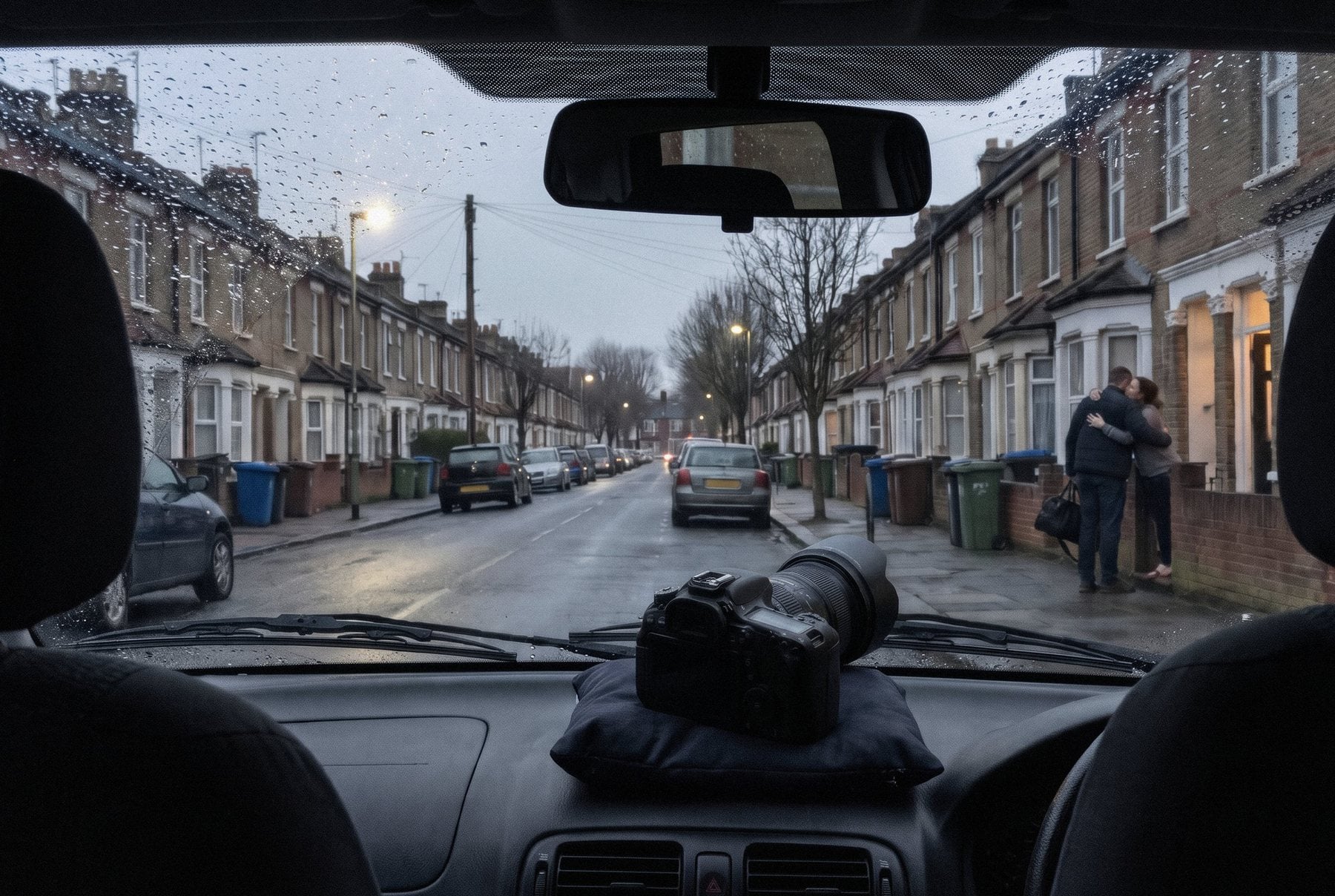

A cross-border child custody investigation starts with a frightening moment. A child is abroad, and a parent cannot reach them. Sometimes the other parent has taken the child without consent. Sometimes a holiday has quietly become a move. Or a court in another country is deciding where the child will live. In each case, the parent needs facts, fast, and in a form a court will accept.
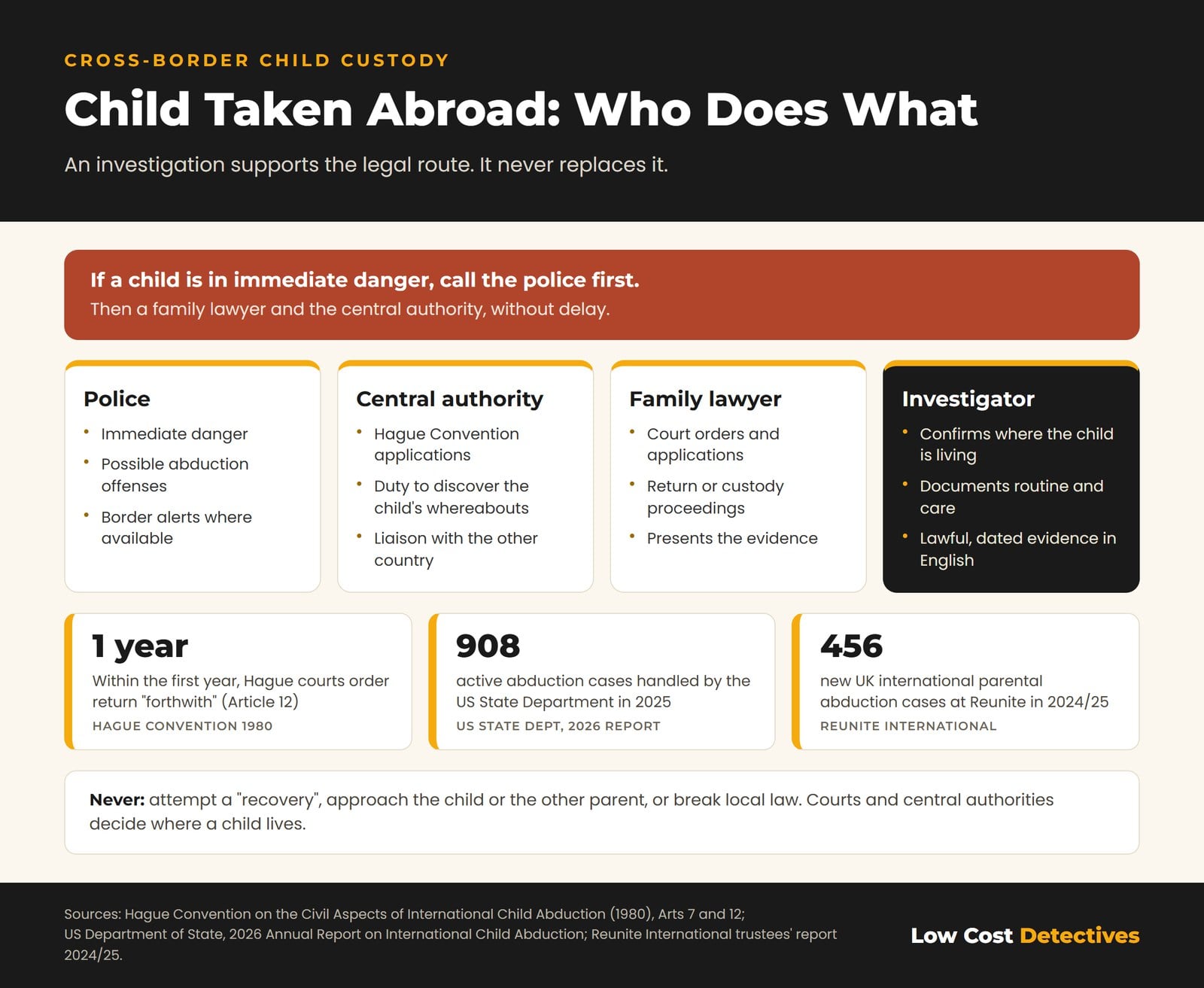
It happens more often than many people realize. In 2025, the US State Department handled 908 active international abduction cases. In the UK, the charity Reunite received 456 new cases of international parental child abduction in 2024/25. If a child is in immediate danger, call the police first. This guide explains the legal routes and where a cross-border child custody investigation fits.
Key Takeaways
- Police and lawyers come first: an investigation supports the legal route and never replaces it.
- Time matters: under the Hague Convention, a return within the first year is ordered “forthwith”.
- Investigators locate and document: where the child lives, who cares for them, and their daily routine.
- Evidence must be lawful where it is gathered: otherwise a court may refuse to rely on it.
When a Custody Dispute Crosses a Border
Custody disputes become far harder once a border is involved. Two countries’ laws may apply, and the parent abroad may not respond. Often the first problem is simply not knowing where the child is.
Preventing a Child Being Taken Abroad
Prevention is easier than recovery. In the UK, government guidance is clear. Taking a child abroad needs permission from everyone with parental responsibility, or from a court. The Child Abduction Act 1984 makes removing a child under 16 from the UK without consent an offense. In the US, removing a child abroad to obstruct the other parent’s rights is a federal crime.
If you fear a planned removal, speak to a lawyer quickly. Courts can make orders to stop it, and warning signs are worth documenting. A sudden passport application, sold belongings or a resigned job are common examples.
When It Has Already Happened
If the child has already gone, act at once. Contact the police and a family lawyer. Then reach the central authority for international abduction. In England and Wales, that is the International Child Abduction and Contact Unit. If you are unsure where to start, talk to our team in confidence. Every week of delay can matter, for reasons the Hague Convention makes clear.
The Hague Convention and Countries Outside It
The 1980 Hague Convention on international child abduction is the main legal tool. It has 103 contracting parties. Its stated purpose is “to secure the prompt return of children wrongfully removed” or kept abroad. It applies to children under 16 who were habitually resident in a contracting state before the removal.
Timing is critical. Within the first year, Article 12 says the court “shall order the return of the child forthwith”. After a year, the child may be found settled in the new country. That gives the other parent a defense. Courts can also refuse return on other limited grounds, such as a grave risk of harm.
The Convention also requires central authorities to take steps “to discover the whereabouts” of a wrongfully removed child. That official duty is important. However, it can be slow, and it depends on the other country’s cooperation. Where the child is in a country outside the Convention, there is no shared return process at all. Cases there depend on local courts, diplomacy and good evidence.
What a Cross-Border Child Custody Investigation Does
An investigation does not replace the courts or central authorities. Instead, it gives them better information, sooner. A cross-border child custody investigation usually has two aims: finding the child, and showing how they live.
International Child Tracking
International child tracking means confirming where the child and the other parent actually are. Low Cost Detectives starts with tracing. Our people tracing service works through records, open sources and inquiries by local agents. The result is a confirmed address, plus associated addresses and the people the other parent lives with. The other parent is never approached or alerted.
A confirmed location helps in practical ways. A lawyer can serve papers, and a court can make an enforceable order. A central authority can also act. In countries outside the Hague Convention, it may be the only reliable starting point.
Documenting the Child’s Circumstances
Custody decisions turn on the child’s welfare, so courts want to know how the child is living. Our surveillance team can document the daily routine from a discreet distance. That includes who takes the child to school, who they live with, and whether school attendance is regular. Low Cost Detectives works through 300+ branches in 170+ countries, using bilingual local agents. Every report is delivered in English.
This work is done with particular care. Investigators focus on the adults and the circumstances, not on photographing the child. They never approach the child or the other parent. Where a new partner or household is unknown, international background checks can add useful context.
Gathering Legal Evidence Across Borders
Evidence from a cross-border child custody investigation is often used by a court in another country. That creates a simple rule: it must be lawful in the place it was gathered. An investigator who breaks local privacy or filming laws can make the evidence unusable. They may also harm the parent’s case.
What Makes Custody Evidence Court Admissible
In a cross-border child custody investigation, court admissible custody evidence tends to share the same qualities. It is gathered lawfully, by methods the investigator can explain. It is dated, logged and kept in its original form, with a clear record of who gathered it. Where local law does not allow filming, a detailed written log takes its place. Translations of anything in another language should be accurate and clearly marked.
Courts weigh this kind of evidence alongside reports from social workers and other professionals. Our guide to the US and UK rules on surveillance evidence explains how judges assess it. For family courts in England and Wales, see surveillance evidence in UK family courts.
What Investigators Must Never Do
Some lines are absolute. No reputable investigator will try to take a child back, however strong the parent’s case. A “recovery” outside the legal process can itself be abduction, and it can wreck a return application. Investigators also never approach the child, never mislead foreign officials, and never break local law. At Low Cost Detectives, we locate and document. Courts and central authorities decide where the child lives.
Four Steps When a Child Is Taken or Kept Abroad
Bringing this together, in practice cases tend to follow the same order. Each step builds on the one before.
Step 1: Act Quickly and Lawfully
Call the police if the child is in danger. Then contact a family lawyer and the central authority straight away. Keep copies of court orders, the child’s documents, and any messages about the trip or the move.
Step 2: Locate the Child
If the address abroad is unknown or uncertain, an investigation can confirm it. That gives your lawyer and the central authority a firm address to act on.
Step 3: Document the Circumstances
Where welfare is in question, discreet surveillance can record the child’s routine and living arrangements. Our child custody investigations plan this around the questions your lawyer needs answered.
Step 4: Build Evidence a Court Will Accept
Make sure every finding is lawful, dated and properly documented, then let your lawyer present it. Evidence prepared this way supports a Hague application, a custody hearing or enforcement abroad. Low Cost Detectives prepares every report with that use in mind.
A cross-border child custody investigation works best alongside your lawyer from the start. If your child is abroad and you need answers, speak to our case managers in confidence. Low Cost Detectives has over 30 years of experience and a 95% global success rate.
Frequently Asked Questions About Cross-Border Child Custody
Can a private investigator bring your child back?
No. Returning a child is a matter for the courts and central authorities, usually through a Hague Convention application. In a cross-border child custody investigation, the role is to locate the child and document the circumstances. That information helps your lawyer and the authorities act faster and with better evidence.
What if the country is not part of the Hague Convention?
Then there is no shared return process. The case depends on that country’s courts and on diplomatic help. Good evidence matters even more. A confirmed address and a clear record of the child’s life give your lawyer a firmer basis there.
Will evidence gathered abroad be accepted by a court at home?
Often, yes, if it was gathered lawfully in the country concerned and properly documented. Each court applies its own rules and decides how much weight to give it. Evidence gathered by breaking local law risks being excluded, so method matters as much as findings.
How much does a cross-border child custody investigation cost?
Surveillance costs £60 per agent per hour. Our surveillance uses a two-person team with a vehicle, usually over three days or nights. Tracing work is scoped separately, depending on the country. Before work begins, your case manager confirms the plan and any expenses in confidence.