Remote worker surveillance used to mean software. Employers installed tools that logged keystrokes, captured screenshots and scored activity, and assumed that covered it. In 2026, more of them are finding that it does not. Software records what happens on a laptop. It cannot show where the person using it actually is.
That gap is driving a quieter trend: a rise in physical surveillance of employees. Reports from the UK, Germany and France describe more employers hiring investigators, mostly over sick leave. At Low Cost Detectives, we have seen the same rise in our own inquiries. This article covers that evidence, the limits of software, and what UK law requires.
Key Takeaways
- Monitoring software is now the norm: 74% of US employers use online tracking tools, a 2025 survey found.
- Software has a blind spot: it measures device activity, not where the employee actually is.
- Physical surveillance is rising: UK and European reporting shows more employers hiring investigators to check sick leave.
- Three issues drive physical surveillance: second jobs, long-term sick leave and competing side businesses.
- UK law sets a high bar: the ICO expects covert monitoring only in exceptional, clearly justified cases.
The Rise of Bossware, and the Trust Gap It Created
“Bossware” is the informal name for software that tracks employees as they work. Its growth has been rapid. In a survey of 1,500 US employers published in 2025, ExpressVPN found that 74% use online tracking tools. These include web browsing logs and real-time screen tracking, and 67% use biometric methods such as fingerprint scans. The Business Research Company values the global monitoring software market at 4.59 billion dollars in 2026. That is up from 3.89 billion in 2025.
Employees, however, are often unaware of it. The same ExpressVPN survey found that only 22% of employees knew they were being monitored online. In the UK, research for the Information Commissioner’s Office (ICO) found 70% would find workplace monitoring intrusive. Only 19% said they would be comfortable taking a job if they knew they would be monitored.
What Monitoring Software Cannot See
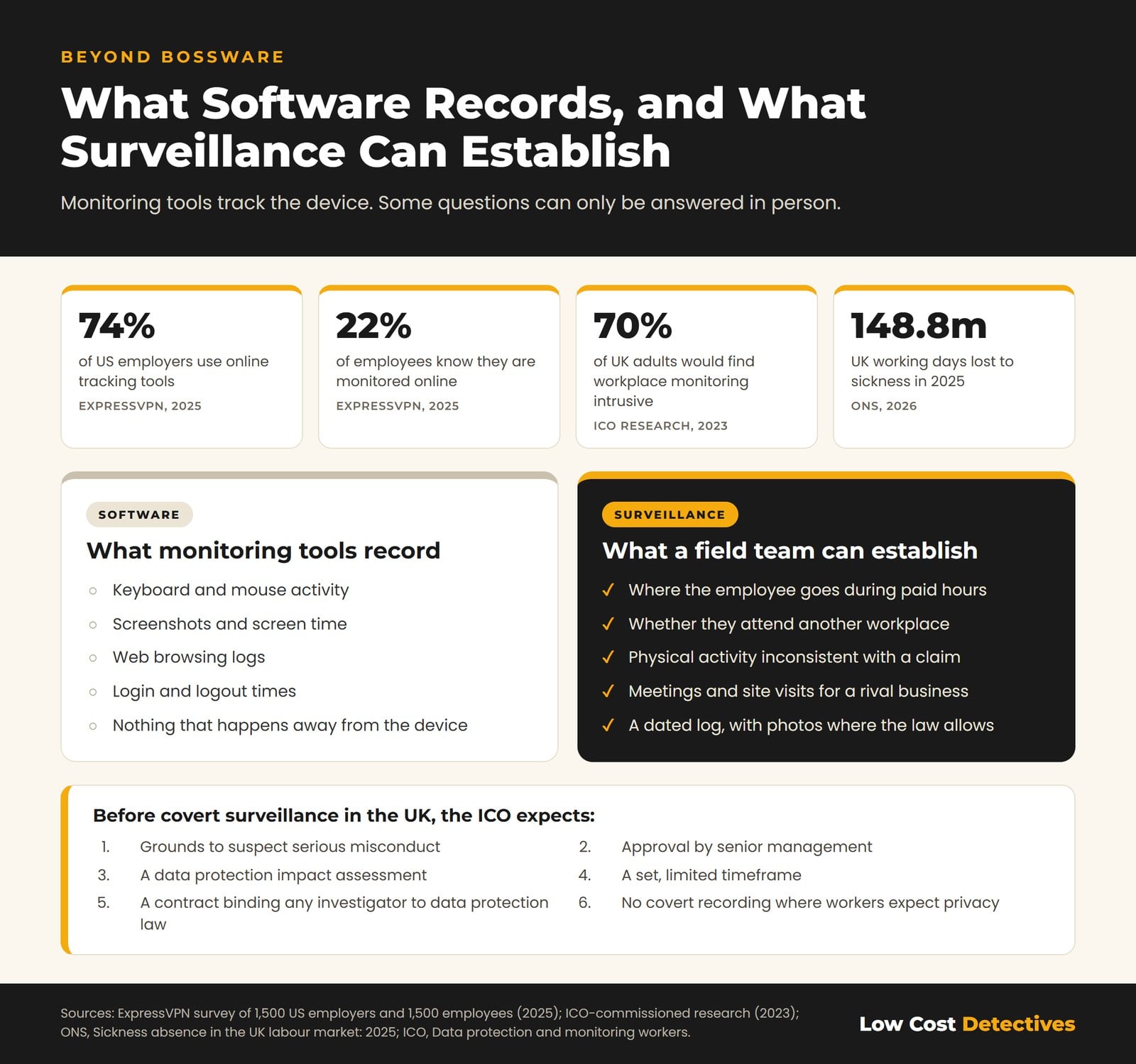
Monitoring software tracks the device, not the person. A green status light shows that a laptop is active. It does not show who is using it, where they are, or whether they are also working elsewhere.
Software is also easy to fool. In June 2024, Wells Fargo fired more than a dozen staff in its wealth management unit. Bloomberg reported the bank’s regulatory disclosures. Staff were dismissed after allegations of “simulation of keyboard activity creating impression of active work.” The disclosures did not say whether the staff worked from home, but the lesson applies either way. Small devices that move a mouse automatically are cheap and widely sold. Against them, activity scores mean very little.
Above all, many of the issues employers worry about happen away from the screen. An employee on sick leave is not logged in at all. A second job is done on a second laptop. A competing business is run from a car park, a client’s office or a rented unit. None of that appears in a productivity report.
Why Employers Are Turning to Physical Surveillance of Remote Workers
When software runs out, more employers are commissioning physical remote worker surveillance. Trained investigators observe an employee in person, over a set period. It is a targeted step, not a replacement for normal management.
The Evidence of a Rise in Remote Worker Surveillance
The shift shows up across several countries. In May 2026, The Telegraph reported that more large UK employers are hiring private investigators. Their targets are staff suspected of faking long-term sick leave or misusing remote working. Employers pushing for a return to the office, the report noted, often find that hard to enforce.
Germany shows the same pattern. In December 2024, Reuters reported a German detective receiving a record number of such requests from employers. German sick leave rose from 11.1 days per worker in 2021 to 15.1 in 2023, official figures show.
France is moving the same way. In 2025, Reuters spoke to five private investigators, and all said their sick leave work was booming. France’s national health insurer also said it prevented 42 million euros of sick leave fraud in 2024. That was more than double the 2023 total.
We see the shift in our own work, too. Inquiries to Low Cost Detectives from employers about remote staff have clearly increased. They fall into three main groups.
Second Jobs and Overemployment
“Overemployed” describes people who quietly hold two or more jobs at once, often both remote. A 2024 ResumeBuilder survey of 1,250 full-time US remote workers suggests it is common. Seven in ten respondents had more than one job. Among those with two jobs, 37% said the second one was full-time.
A second job is not automatically misconduct, and many contracts allow one. The problem arises when it happens during contracted hours, for a competitor, or against an exclusivity clause. Surveillance can show whether an employee attends another workplace during their paid hours.
Long-Term Sick Leave
The Office for National Statistics estimates 148.8 million UK working days were lost to sickness in 2025. That is about 4.4 days per worker. Most absence will be genuine, and employers should treat it that way.
Occasionally, though, the evidence does not fit the claim. An employee signed off with a back injury may be seen doing heavy physical work elsewhere. Surveillance records what a person does in view, with times and dates. It does not diagnose anyone, so the findings are best weighed alongside medical evidence. Where an insurer is involved, our insurance fraud investigations follow the same approach.
Competing Side Businesses
The third trigger is an employee running a rival business on company time, or with company clients. Here, surveillance can show meetings, site visits and premises that a laptop log never would. These cases often combine surveillance with background research, such as company records or employment background checks. If one of these situations sounds familiar, talk to our team in confidence.
In each case, the employer needs more than a suspicion. That is where the law comes in.
Is Workplace Surveillance Legal? The UK Rules
In the UK, monitoring employees is legal, but it is tightly regulated. The ICO’s guidance on monitoring workers says employers must normally tell staff about any monitoring. Covert monitoring is the exception. The ICO says it is “unlikely” to be justified “in most usual circumstances.”
Exceptional circumstances do exist, such as suspected criminal activity or gross misconduct. Even then, the ICO guidance sets clear conditions. Before any covert remote worker surveillance begins, an employer should have:
- Grounds for suspicion: a reason to suspect misconduct, and why telling the employee would undermine the inquiry.
- Senior sign-off: the ICO says covert monitoring should only be approved by senior management.
- A data protection impact assessment: the ICO says employers must carry one out.
- A set timeframe: monitoring limited to the shortest time possible, and stopped when the investigation ends.
- A contract with any investigator: it must require them to collect information in line with data protection law.
The guidance also rules out covert recording where workers expect privacy. It limits the use of what is collected to its stated purpose. In practice, “productivity paranoia” is not enough. Covert surveillance needs a specific concern, a documented decision and a defined end point. Other countries have their own rules. Our guide to data privacy laws for investigators covers the wider picture.
What a Surveillance Team Can and Cannot Establish
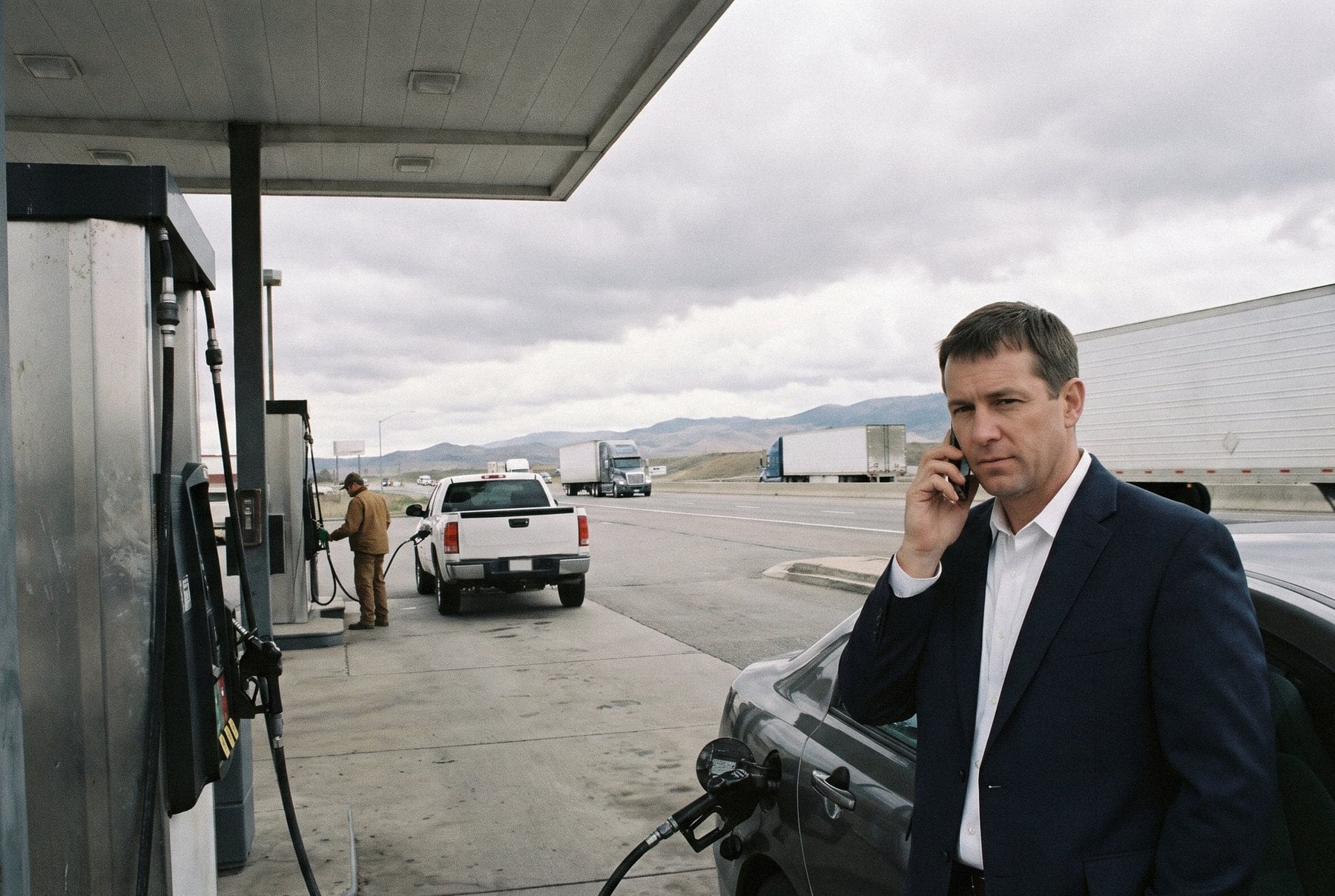
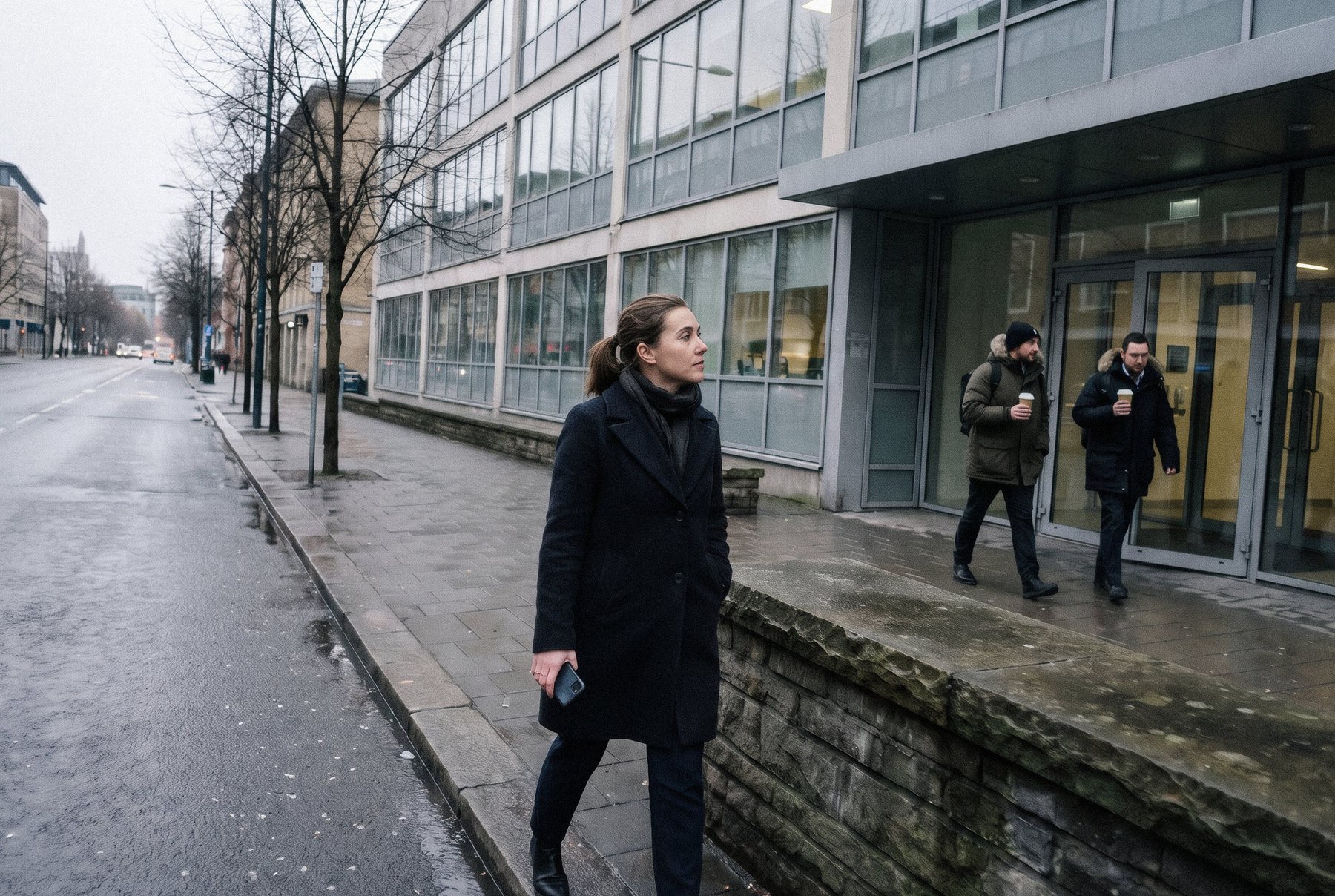
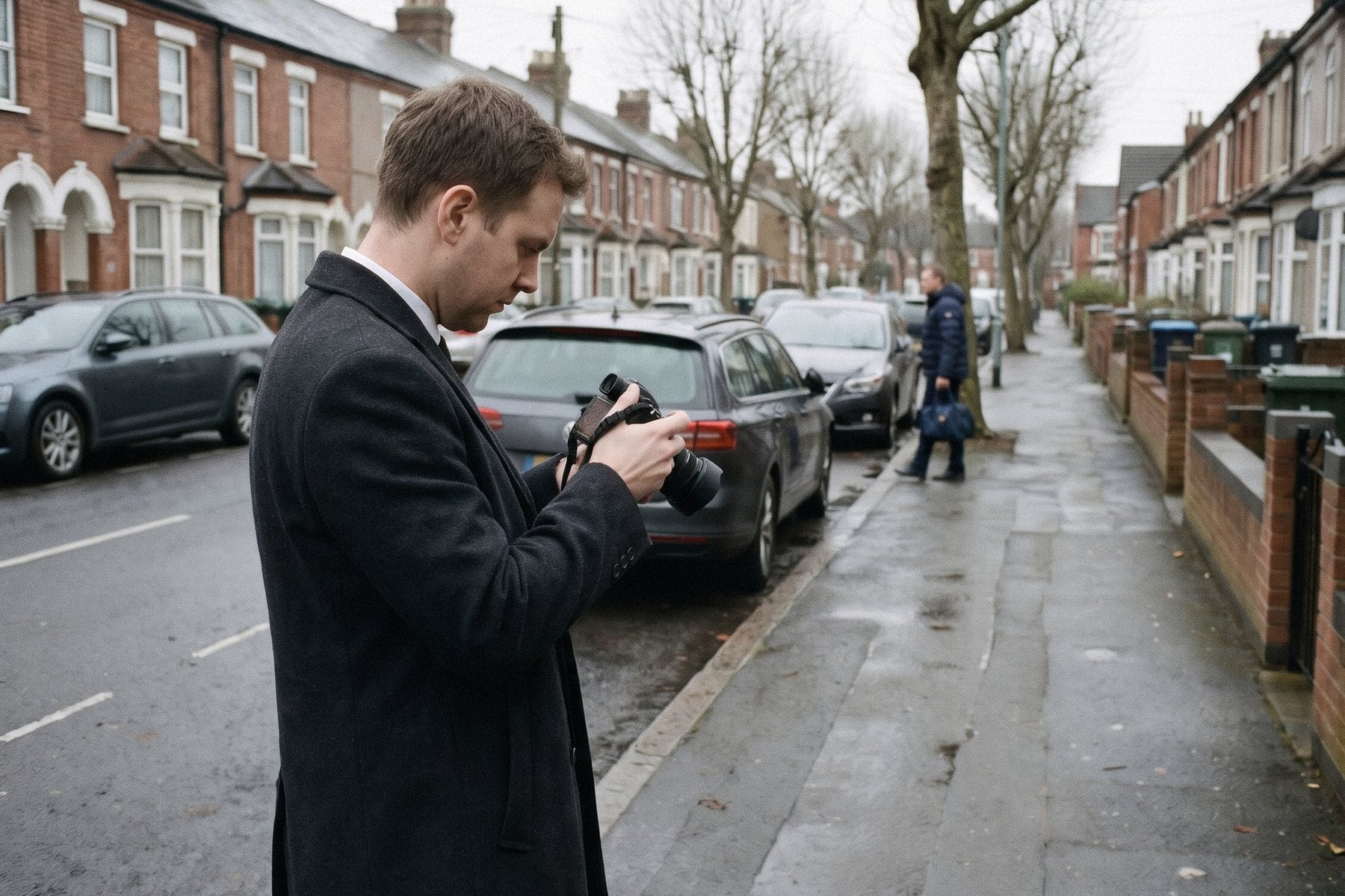
Physical surveillance answers specific questions about what someone does in view. Low Cost Detectives runs remote worker surveillance with two investigators and a dedicated vehicle. Our surveillance team typically works over three days or nights. They record where the employee goes during working hours and whether they attend another workplace. They also note any physical activity. Each observation goes into a dated log, with photographs where local law allows.
It has clear limits, too. Surveillance cannot see what is on a screen, read private messages or look inside someone’s home. Nor can it say whether an illness is genuine. It can only show behavior that is consistent, or not, with what the employee has said.
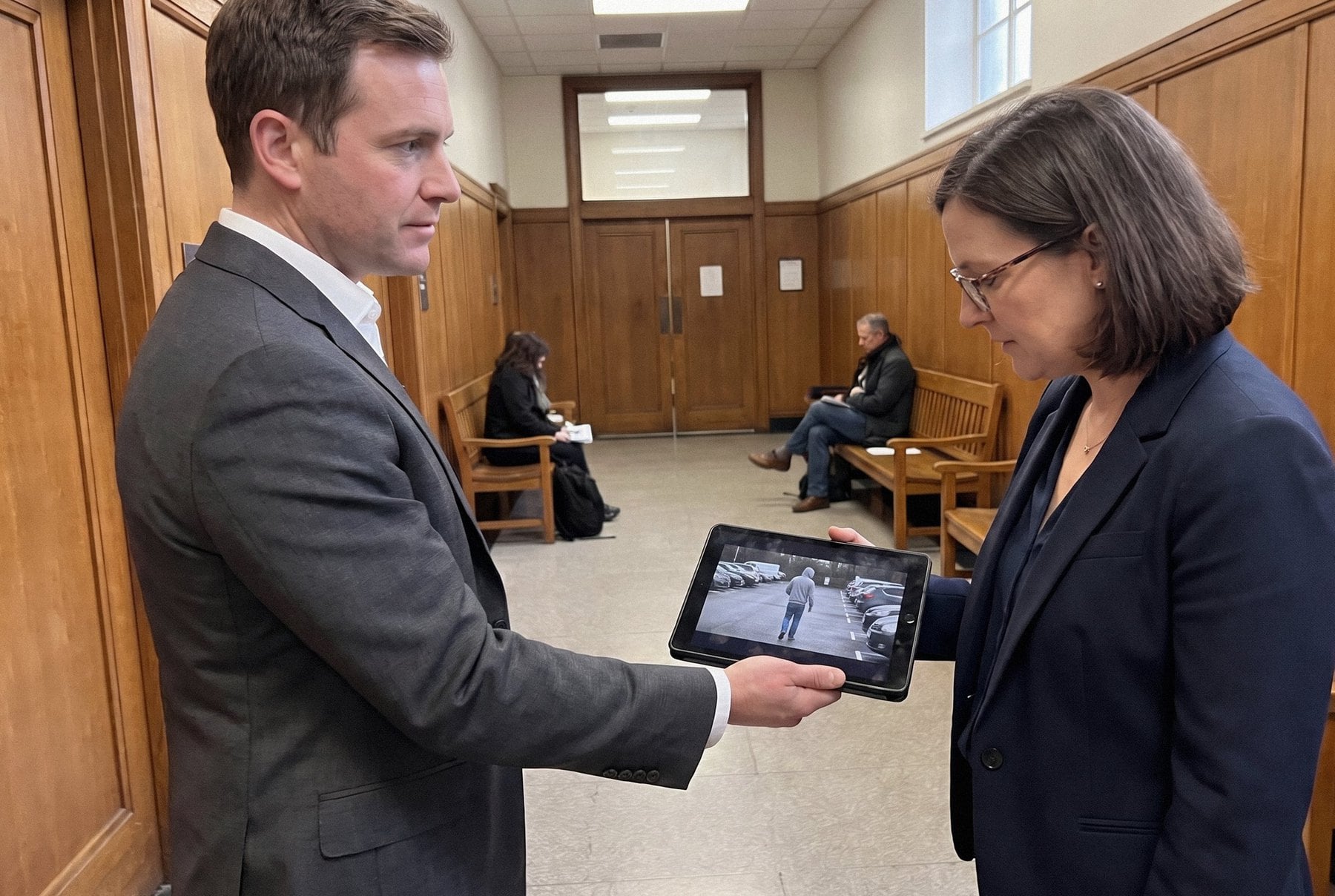
Sometimes the most useful result is that nothing is found. A report showing an employee at home throughout their sick leave protects both sides. It closes the question fairly. When the findings do point to misconduct, the evidence usually feeds a disciplinary process first. If a case goes further, see our guide to surveillance evidence in UK courts and tribunals.
A Measured Response to a Real Problem
Remote worker surveillance is not about watching everyone more closely. The data suggests employers already monitor heavily, and many employees find it intrusive. The shift we are seeing is narrower. Employers want firm answers in a small number of serious cases that software cannot resolve.
For those cases, remote worker surveillance should be proportionate, documented and time-limited. Start with a clear suspicion, sign-off from senior management, and a written brief for the investigator. Our corporate surveillance services are built around that process. Low Cost Detectives works through 300+ branches in 170+ countries, with over 30 years of experience. We also hold a 95% global success rate. To discuss a case in confidence, speak to our case managers.
Frequently Asked Questions About Remote Worker Surveillance
Can an employer hire a private investigator to watch a remote employee?
Yes, in the right circumstances. In the UK, covert surveillance needs a genuine suspicion of serious misconduct and senior sign-off. A data protection impact assessment is also required. The employer must also have a contract requiring the investigator to follow data protection law. Without those steps, the surveillance may be unlawful and the evidence harder to use.
What should an employer prepare before commissioning remote worker surveillance?
Write down the specific concern and the evidence behind it. Unexplained absences or reports of a second job are typical examples. Then decide the question surveillance must answer, and the days it should cover. Finally, record the senior management decision and the data protection assessment. A clear brief keeps the work focused and defensible.
Can surveillance evidence be used at a disciplinary hearing?
Usually, yes, if it was gathered lawfully and in proportion to the concern. A fair process normally lets the employee see the evidence and respond. Dated photographs and a written log give a hearing something concrete to consider. Clumsy or excessive surveillance, by contrast, can undermine an otherwise fair process.
How much does remote worker surveillance cost?
Surveillance costs £60 per agent per hour. Our surveillance uses a two-person team with a vehicle, usually over three days or nights. Before work begins, your case manager confirms the hours, team and any expenses in confidence. Low Cost Detectives can also advise on how to scope the brief tightly.