International surveillance laws change the moment a subject crosses a border. A tail that was lawful in one country can become trespass or stalking in the next. Most clients never see this moment. They only see whether the evidence keeps coming.
It helps to know what does not happen. No investigator follows a subject abroad on borrowed police powers. Extradition does not come into it either. What keeps a case moving is a lawful handover to a local team on the other side.
This guide explains the rules at the border and the police powers investigators cannot use. It then shows how a handover works. At Low Cost Detectives, our local agents in 170+ countries make that handover possible.
Key Takeaways
- Licenses stop at the border: a license from one state or country rarely covers the next.
- Police powers do not transfer: Schengen cross-border surveillance is for police in criminal cases, not investigators.
- Extradition is not the tool: it returns wanted people to face trial and gives investigators no powers.
- The handover is the tool: local agents in the next country take over under their own law.
- Data crosses borders too: sharing findings abroad needs a lawful route under data protection law.
International Surveillance Laws: Why Every Border Changes the Rules
There is no international license for private investigators. Each country, and in the US each state, decides who may investigate and how. So international surveillance laws are really a patchwork of local laws. They differ on licensing, filming, tracking devices and data protection.
Private Investigator Crossing Borders: Where a License Stops
Most US states require private investigators to be licensed, according to the Bureau of Labor Statistics. A few states share limited reciprocity, and the terms are tight. Under North Carolina’s reciprocity terms, the case must start in the investigator’s home state. Work is limited to 30 days per case, or 15 days for Tennessee. Longer jobs must go to an investigator licensed in that state.
That is why our surveillance across North America uses locally employed investigators in each area. A private investigator crossing borders on their own license soon runs out of road.
Europe has its own rules. Belgium’s Private Investigation Act came into force in December 2024. It requires prior authorization from the Ministry of the Interior, and it applies GDPR to all private investigations.
Filming Rules Change Too
Filming is where international surveillance laws differ most visibly. Some countries do not permit photos or video of people without their consent. In 23 countries, including the UAE, Saudi Arabia, India and Singapore, our teams run observation-only surveillance. They record movements and meetings in a written log instead. Our surveillance across Asia switches method wherever local law requires it.
Extradition, Schengen and Police Powers: What Investigators Cannot Borrow
Extradition is “the formal process where one country asks another to return a person.” That is the UK government’s definition, and the person returns to stand trial or serve a sentence. It is a tool for states, courts and law enforcement. It gives private investigators no power to follow anyone anywhere.
International Tracking Laws, Extradition and the Schengen Rules
Inside the Schengen area, police cooperation rules let officers follow a suspect across a border. The Schengen Convention allows it only in a criminal investigation into an “extraditable criminal offence”. The host country must also authorize it in advance. On request, the surveillance passes to the host country’s own officers.
In an emergency, officers may cross before permission arrives. Even then, they must stop “five hours after the border was crossed” without authorization. While abroad, they must follow local law. They may not enter private homes, and they may “neither challenge nor arrest” the subject.
Private investigators get none of these powers. Notice, too, that even police hand over to local officers when asked. A well-run private investigation does the same thing by design.
The Handover: How Cross-Border Field Investigations Stay Seamless and Lawful
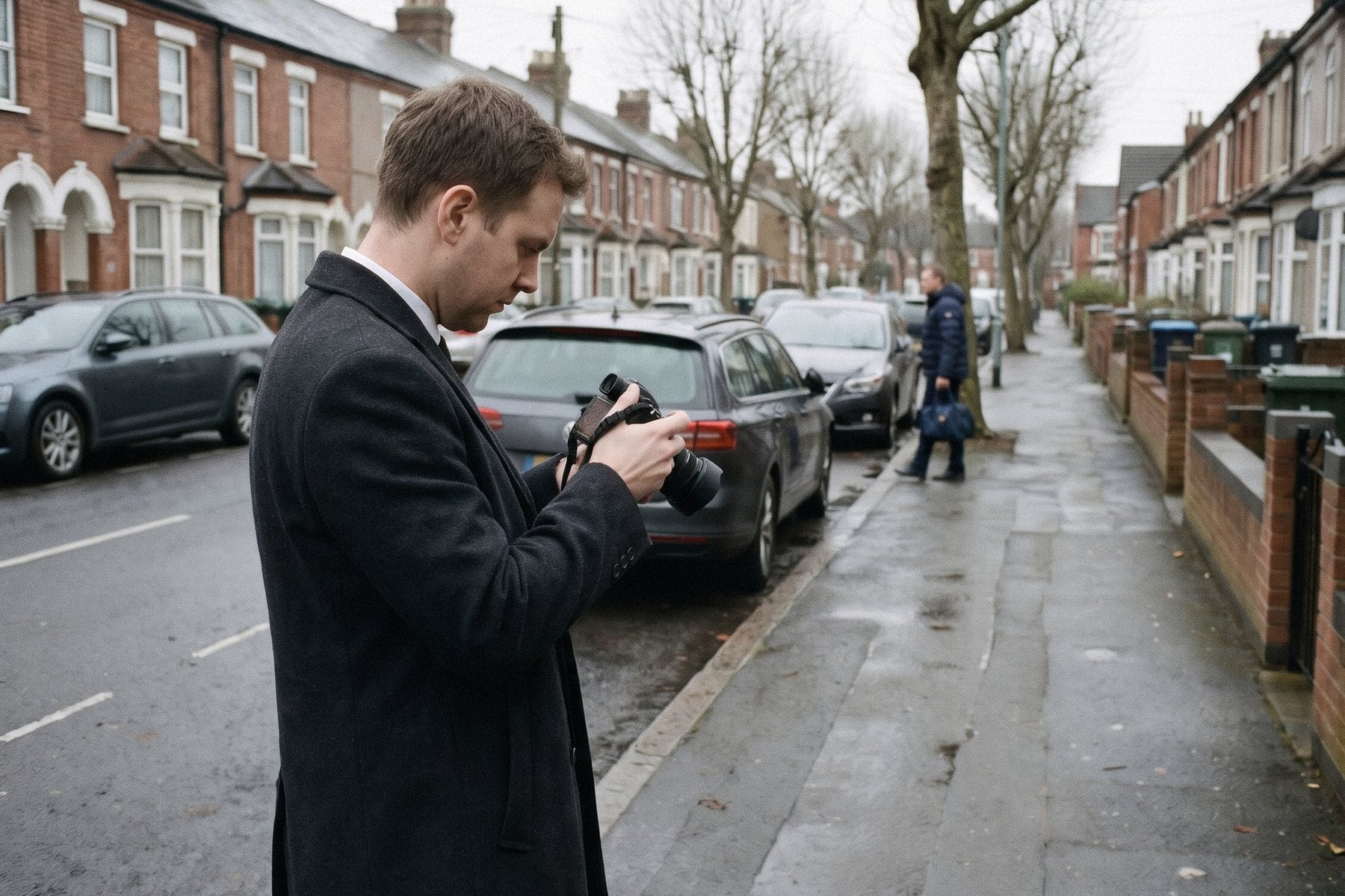
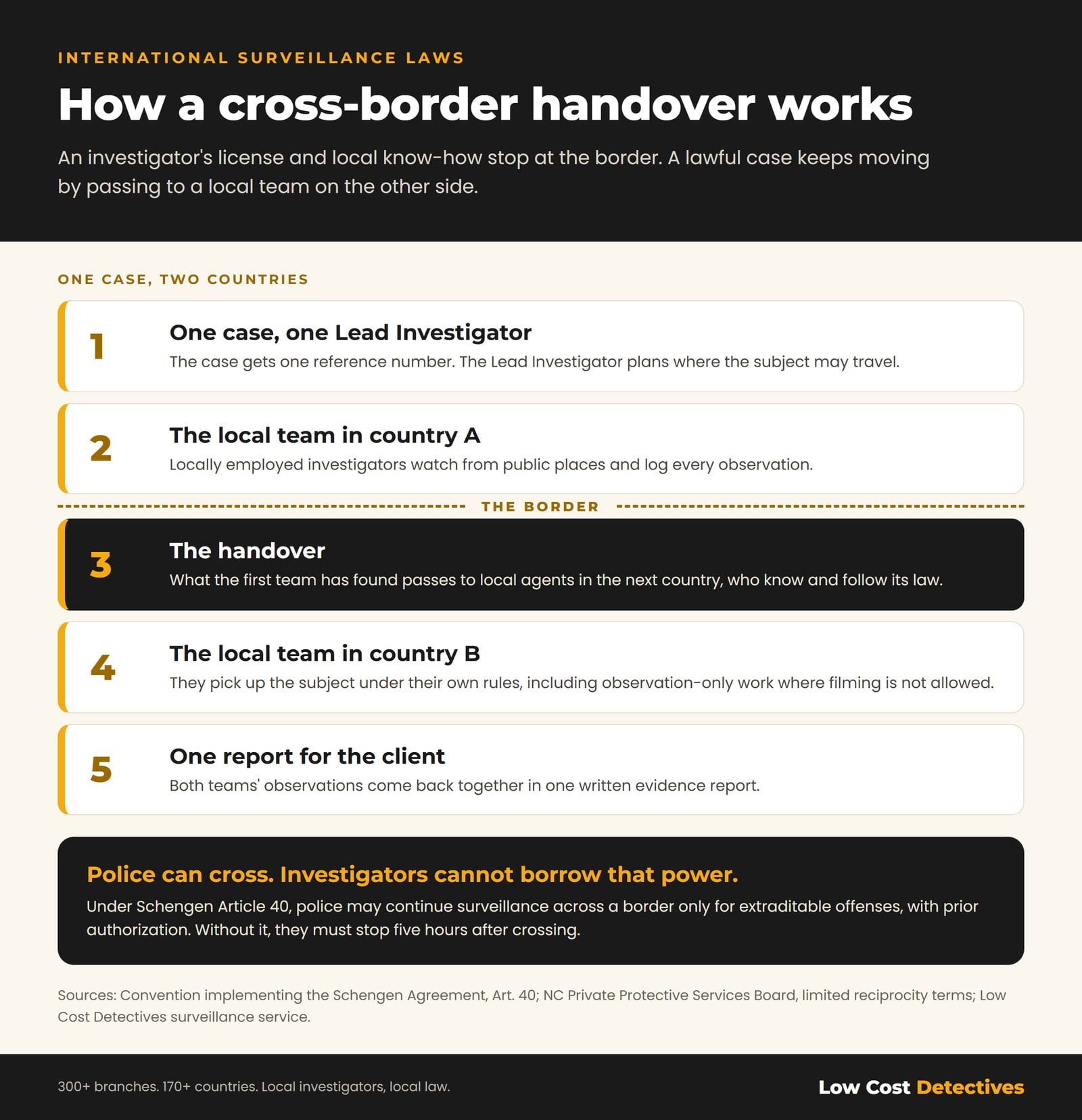
Cross-border field investigations work best as one case run by several local teams. Under international surveillance laws, it is also the safest way to run them. At Low Cost Detectives, a Lead Investigator coordinates the case from start to finish. The surveillance itself is carried out by locally employed investigators who know the area and its jurisdiction.
When a subject heads for a border, the Lead Investigator alerts our team in the next country. What the first team has found passes to them: the subject’s description, vehicle, routine and latest movements. They pick up the case under their own country’s law. They also know the language, the roads and the local culture.
Our surveillance across Europe handles a case that starts in France and moves into Spain this way. Our South American network does the same between neighboring countries.
What the Client Sees
For the client, the border is almost invisible. There is one case reference, one point of contact and one written evidence report. Behind it, each part of the work was done by local investigators working within their own country’s law. That makes evidence from several countries easier to defend.
If the subject has already settled abroad, our global tracing team can find a current address first. Infidelity cases often involve travel, from business trips to weekends abroad. Business cases cross borders too, from a partner moving money to a claimant working abroad. Our team also handles due diligence and asset tracing across borders. If your subject travels, speak to our investigators before they leave.
Tracking, Filming and Data When a Case Moves Between Countries
Tracking Devices
GPS tracking devices are a common trap under international surveillance laws. A device that is lawful in one place can be an offense in the next. California bans using an electronic tracking device to locate a person without the vehicle owner’s consent. UK stalking law lists “interfering with any property in the possession of a person.” It also lists “watching or spying on a person.” A car that crosses a border carries its tracker into a new set of rules.
Filming
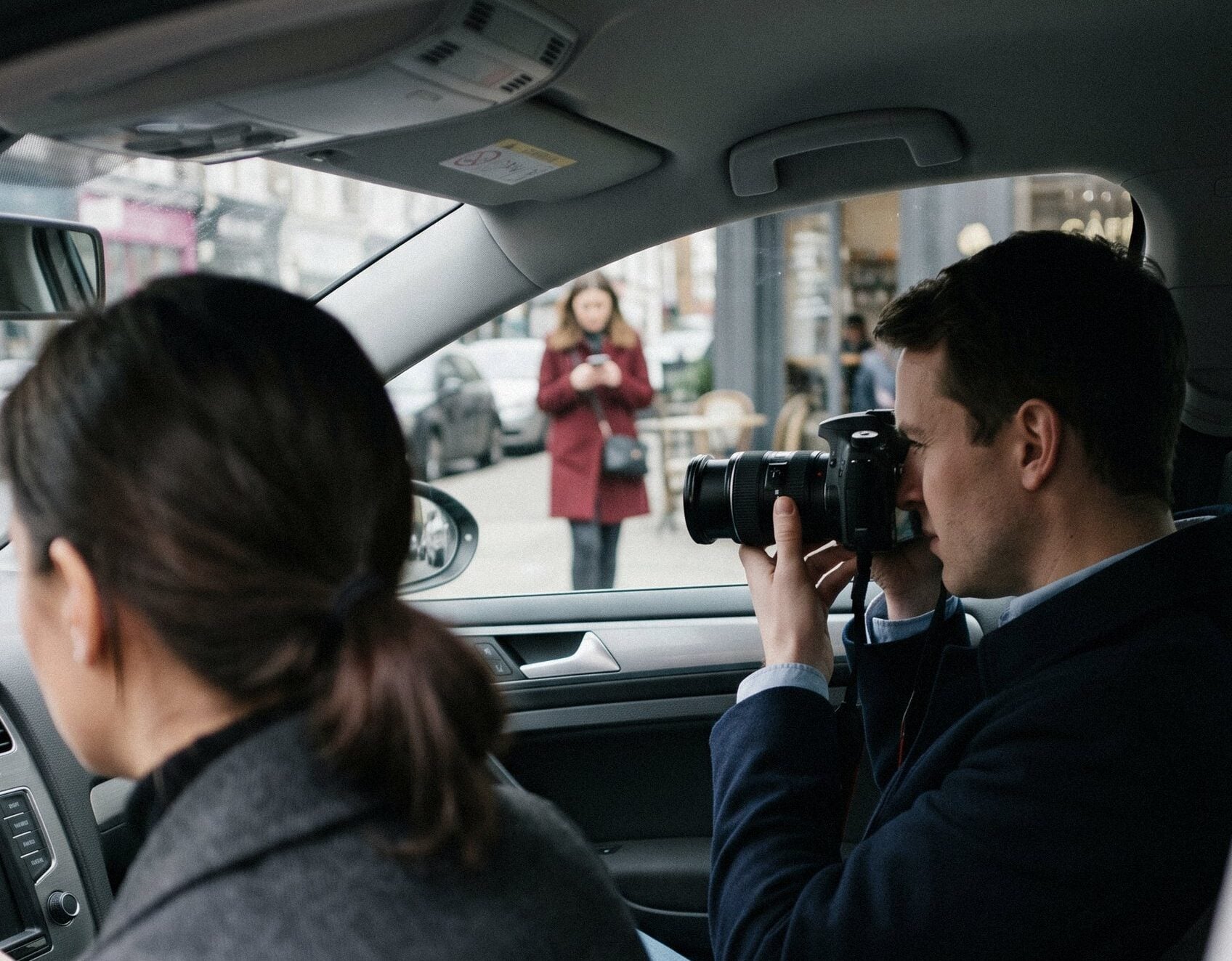
Where filming in a public place is allowed, Low Cost Detectives teams capture time-stamped photos and video. Where it is not, they switch to written observation instead of recording. The method follows the country, not the client’s preference.
Moving Data Across Borders
Findings about a person are personal data, protected by privacy law. Sending them outside the EU or UK counts as an international transfer under GDPR Article 49. One route covers transfers “necessary for the establishment, exercise or defence of legal claims.” A well-run handover shares only what the next team needs, and records why.
Evidence gathered across borders often ends up in court. Our legal and litigation support team works with lawyers on cross-border cases.
Plan for the Border Before the Subject Reaches It
International surveillance laws do not stop a case at the border. They decide who may carry it on, and how. A tail that changes hands lawfully keeps its evidence. One that pushes on alone puts it at risk.
Our surveillance private investigator service runs through 300+ branches in 170+ countries, with local investigators in each. Low Cost Detectives plans the handover before it is needed. Talk to our team in confidence about where your subject may travel.
Frequently Asked Questions About International Surveillance Laws
Can a private investigator follow someone across a border?
Not on their own license in most cases. A license covers the state or country that issued it. Some US states allow only short reciprocal visits. The cross-border powers police have are not open to investigators. The lawful approach is a handover to a local investigator on the other side. That is how Low Cost Detectives runs cross-border cases.
Do private investigators need a license in every country?
No single license covers them all. International surveillance laws leave licensing to each country, and in the US to each state. Most US states license investigators, and a license rarely carries over. Belgium requires prior authorization from its Ministry of the Interior. Working through locally employed investigators is the simplest way to stay within each country’s rules.
Can police follow a suspect into another country?
In the Schengen area, yes, within limits. Police may continue surveillance into another member state for an extraditable criminal offense, with prior authorization. In an emergency they can cross first, but must stop after five hours without approval. They must follow local law and cannot enter private homes or arrest the subject.
Is it legal to use a GPS tracker on a car that travels abroad?
It depends on every country the car enters. California bans tracking a person through a device on a vehicle without the owner’s consent. UK stalking law covers interfering with someone’s property and spying on them. A tracker that is lawful at home can become an offense across the border.
Will evidence gathered abroad be accepted in court at home?
It can be admissible, if it was gathered lawfully where it was collected and properly documented. Courts look at how evidence was obtained, so methods that break local law put it at risk. Time-stamped logs, original files and a clear record of each handover make foreign evidence easier to rely on.